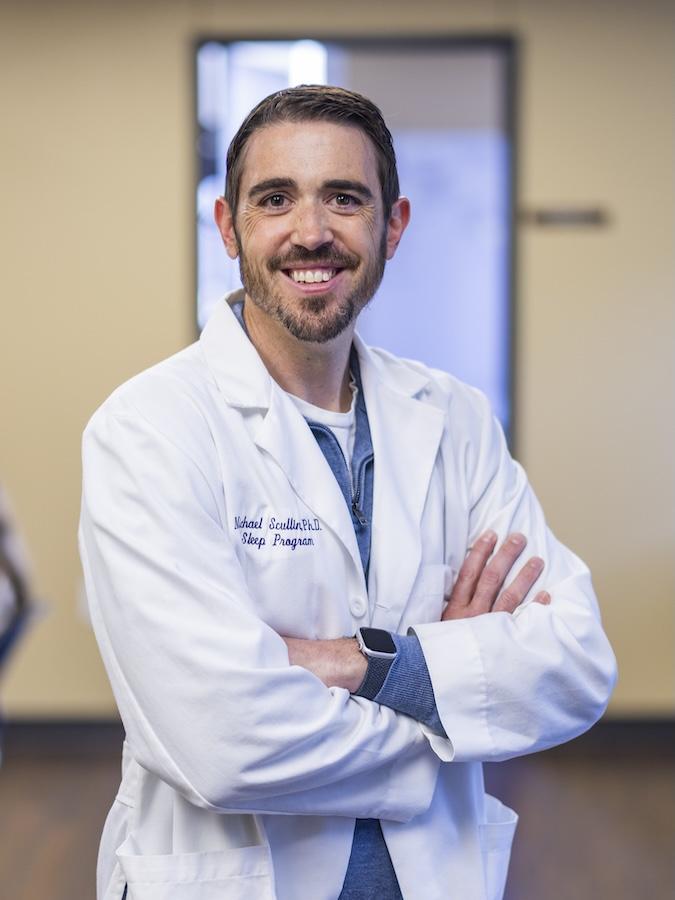
Michael K. Scullin, Ph.D.
- 2017-2018 Newsmaker of the Year
Michael K. Scullin, Ph.D., professor of psychology and neuroscience and director of the Sleep Neuroscience and Cognition (SNAC) Laboratory, was named Baylor University’s inaugural Newsmaker of the Year (2017-2018) for the wide-ranging national and international media coverage of his research on how something as simple as writing a to-do list before bedtime can lead to faster sleep.
Scullin is a nationally recognized sleep expert, exploring how sleep contributes to learning, cognition, well-being and human flourishing across the adult lifespan. And, as the head of the SNAC Lab, he is one of Baylor University’s most prolific and cited researchers and is frequently quoted in the media for the real-life applications of his research.
His 2017 study on the impact of the to-do list on sleep patterns – published in the American Psychological Association’s Journal of Experimental Psychology – followed 57 university students and compared sleep patterns of participants who took five minutes to write down their to-do list before bedtime versus participants who wrote down their completed activities. The “to-do” group fell asleep an average of nine minutes faster than the other group, suggesting that making a list helps clear the head and makes falling asleep easier.
During the 2017-2018 academic year, results of this study were featured in top media outlets, among them ABC’s Good Morning America, TODAY.com, USA TODAY, Discover, LiveScience, TIME, Forbes, HealthDay, BBC Radio and many more. Overall, the news coverage reached an international audience of nearly 1 billion people – making him the ideal inaugural winner of Baylor’s Newsmaker of the Year award.
ABOUT MICHAEL K. SCULLIN, PH.D.
Michael K. Scullin, Ph.D., is a professor of psychology and neuroscience at Baylor University, where his translational cognitive science research aims to connect laboratory-based findings to real world challenges. He is interested in how people use memory to fulfill daily intentions (a special kind of memory called “prospective” memory), including whether reminder apps and other technological solutions can reduce prospective memory difficulties in older age and the early stages of Alzheimer’s disease. He is the principal investigator of Baylor’s Sleep Neuroscience and Cognition Laboratory, which investigates how sleep contributes to learning, cognition, well-being and human flourishing across the adult lifespan. His work is supported by the National Institute on Aging, National Science Foundation, and private foundations.