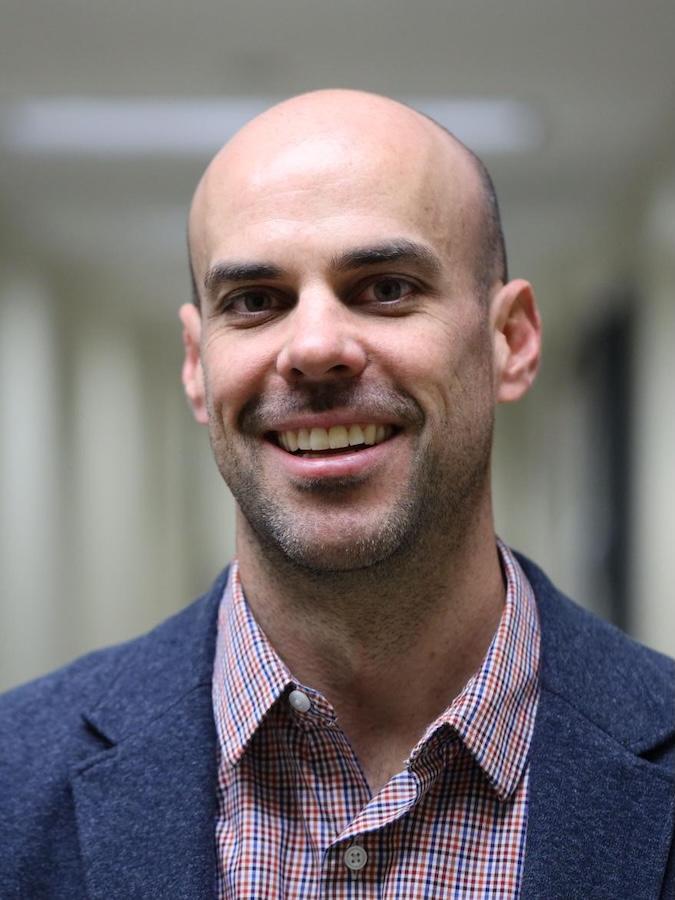
Daniel Peppe, Ph.D.
- 2022-2023 Newsmaker of the Year
Daniel Peppe, Ph.D., associate professor in the Department of Geosciences, was named Baylor University’s Newsmaker of the Year (2022-2023) for the international news coverage of his research that pushed back Africa’s prehistoric timeline by more than 10 million years.
Peppe is a bio-geoscientist whose research focuses on how environmental change drives evolutionary processes in plants and animals. In 2023, after studying plant and animal fossil sites in Kenya and Uganda for more than a decade, Peppe and an international team of researchers discovered a prehistoric Africa different than previously envisioned. They published a pair of breakthrough studies in the journal Science, which found earlier evidence for abundant C4 grasses in eastern Africa and how those C4 grasses and open habitats influenced early ape evolution. C4 grasses were important parts of the early Miocene landscape, and early apes lived in a wide variety of habitats, so these findings directly impacted the timeline of ape evolution in those regions by more than 10 million years.
Peppe’s research was featured by several media outlets, including EurekAlert!, The Conversation, Discover, New Scientist and Innovation Origins, as well as news sites throughout Africa, making Peppe Baylor’s 2022-2023 Newsmaker of the Year.
ABOUT DANIEL PEPPE, PH.D.
Daniel Peppe is an associate professor in the Department of Geosciences at Baylor University. His research focuses on understanding how plant and animal communities respond to changes in climate throughout Earth’s history. Results from his current and future research address a broad spectrum of questions aimed at understanding the relationship between environmental, biotic and climatic change that are recorded in terrestrial sedimentary systems. Peppe has been a scientific consultant for paleontology and earth science-focused television programming, movies and documentaries and is regularly called on by media outlets about scientific breakthroughs in paleontology, paleobotany, paleoclimatology and geology.