

When the Mind Becomes the Monster
As psychological horror surges at the box office, Baylor film expert explores why the monsters audiences imagine are often scarier than what they see

Credit: RgStudio / Collection: E+ / Getty Images
Contact: Shelby Cefaratti-Bertin, 254-327-8012
Follow us: @BaylorUMedia on X and LinkedIn
While horror movies have long relied on monsters, slashers and supernatural villains, many of today's most talked-about films are turning inward, making the human mind the true source of terror.
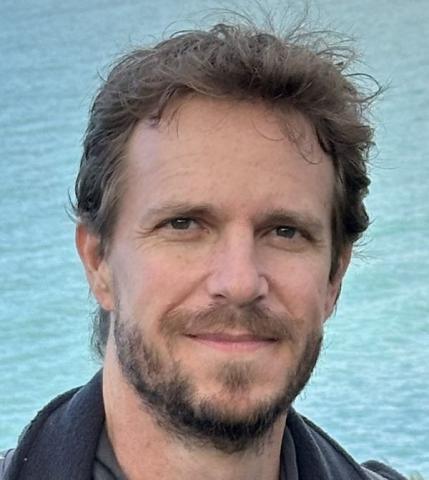
According to cult and horror film expert James Kendrick, Ph.D., professor of film and digital media at Baylor University, psychological horror is resonating with audiences because it taps into fears that are more personal, unpredictable and difficult to escape.
"Psychological horror is by definition boundless," Kendrick said. "So much of it is suggested rather than shown, which makes it inherently more engaging."
Recent films such as Backrooms, Obsession, Other Mommy and Verity have shifted attention away from traditional monsters and toward fears rooted in memory, identity, perception and the darker corners of the human psyche. As psychological horror grows in popularity, Kendrick says its appeal can be traced to three enduring strengths:
What audiences imagine is often scarier than what filmmakers can show
Psychological horror relies less on gore and shock value and more on uncertainty, tension and the viewer's imagination.
"If a filmmaker can make the viewer imagine something in their mind, it is always worse than anything they could show," Kendrick said.
The human mind is the ultimate monster
Unlike traditional horror, psychological horror doesn't require a creature lurking in the shadows. Instead, the threat comes from within, often exploring the unsettling reality that ordinary people are capable of extraordinary evil.
"Psychological horror doesn't need a monster chasing someone through the woods. Instead, it targets the mind, something that follows people everywhere." - James Kendrick, Ph.D.
"Psychological horror doesn't need a monster chasing someone through the woods," Kendrick said. "Instead, it targets the mind, something that follows people everywhere. A psychological horror movie roots monstrosity in the human mind so that there need not be anything supernatural to produce the horror, just the human capacity for evil."
Horror trends evolve, but psychological scares endure
While horror genres rise and fall in popularity, Kendrick said psychological horror has proven remarkably resilient. Tracing the modern form of the genre to Alfred Hitchcock's Psycho (1960), he noted that filmmakers continually reinvent familiar themes to keep audiences engaged.
"Genres always run in cycles, with certain types and subgenres being more popular and less popular at different times," Kendrick said.
As audiences grow accustomed to familiar scares, filmmakers must find new ways to unsettle them.
"There is always the risk of audiences becoming exhausted by the same techniques over and over again," Kendrick said. "Filmmakers have to find ways to be creative and innovative with familiar techniques and motifs."
Whether through reimagined classics or entirely new stories, Kendrick expects psychological horror to remain a powerful force because its central subject never changes. For today's audiences, the scariest monster may not be hiding under the bed or behind a locked door. It may be something that can't be outrun: the human mind itself.
ABOUT BAYLOR UNIVERSITY
Baylor University is a private Christian University and a nationally ranked Research 1 institution. The University provides a vibrant campus community for 20,000 students by blending interdisciplinary research with an international reputation for educational excellence and a faculty commitment to teaching and scholarship. Chartered in 1845 by the Republic of Texas through the efforts of Baptist pioneers, Baylor is the oldest continually operating University in Texas. Located in Waco, Baylor welcomes students from all 50 states and more than 100 countries to study a broad range of degrees among its 12 nationally recognized academic divisions. Learn more about Baylor University at www.baylor.edu.
ABOUT THE COLLEGE OF ARTS & SCIENCES AT BAYLOR UNIVERSITY
The College of Arts & Sciences is Baylor University’s largest academic division, consisting of the School of Earth and Environmental Sciences and 24 academic departments in the sciences, humanities, fine arts and social sciences, as well as 12 academic centers and institutes. The more than 5,000 courses taught in the College span topics from art and theatre to religion, philosophy, sociology and the natural sciences. The College’s undergraduate Unified Core Curriculum, which routinely receives top grades in national assessments, emphasizes a liberal education characterized by critical thinking, communication, civic engagement and Christian commitment. Arts & Sciences faculty conduct research around the world, and research on the undergraduate and graduate level is prevalent throughout all disciplines. Visit the College of Arts & Sciences website.