

Viewing a Solar Eclipse Together Amplifies Awe, Baylor Researchers Find
Study of the 2024 total solar eclipse shows shared viewing experiences boost positive emotions, connection and wonder more than watching alone
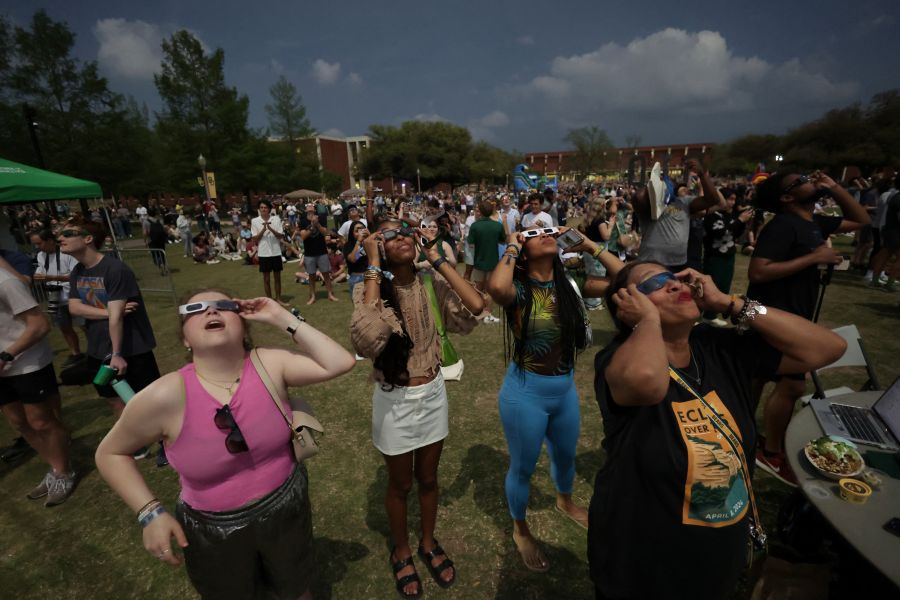
With the path of totality coming through Waco, Texas, Baylor University students experienced the April 18, 2024 Total Solar Eclipse together on campus. (Robert Rogers/Baylor University)
Contact: Lori Fogleman, 254-709-5959
Follow us: @BaylorUMedia on X and LinkedIn
As a total solar eclipse swept across mainland Europe on Aug. 12, 2026, Baylor University researchers studying the April 2024 total solar eclipse in the United States found that experiencing the rare celestial event increased feelings of awe and positive emotion, but the effect was strongest among people who viewed the eclipse with others.
Publishing their findings in The Journal of Positive Psychology, researchers discovered across three studies that collective eclipse viewing amplified awe, strengthened feelings of connection and created a more powerful emotional experience than viewing the eclipse alone. The project is the first of its kind to administer self-report measures of affect, emotion and connectedness to viewers before and after a total solar eclipse, and perhaps the first empirical study to assess the social viewing context.
“There's something powerful about looking up at the sky and realizing thousands of people around you are witnessing the same extraordinary moment. Our findings suggest that shared experiences can amplify feelings of awe in ways that simply don't happen when we're alone." - Baylor Ph.D. Candidate Emily M. Foy
"Scientists have long suspected that shared experiences can intensify emotions, but opportunities to study millions of people experiencing the same event at the same time are rare. The 2024 eclipse gave us a chance to examine that question in a natural setting,” said corresponding author Emily M. Foy, a Ph.D. candidate in psychology at Baylor. “There's something powerful about looking up at the sky and realizing thousands of people around you are witnessing the same extraordinary moment. Our findings suggest that shared experiences can amplify feelings of awe in ways that simply don't happen when we're alone."
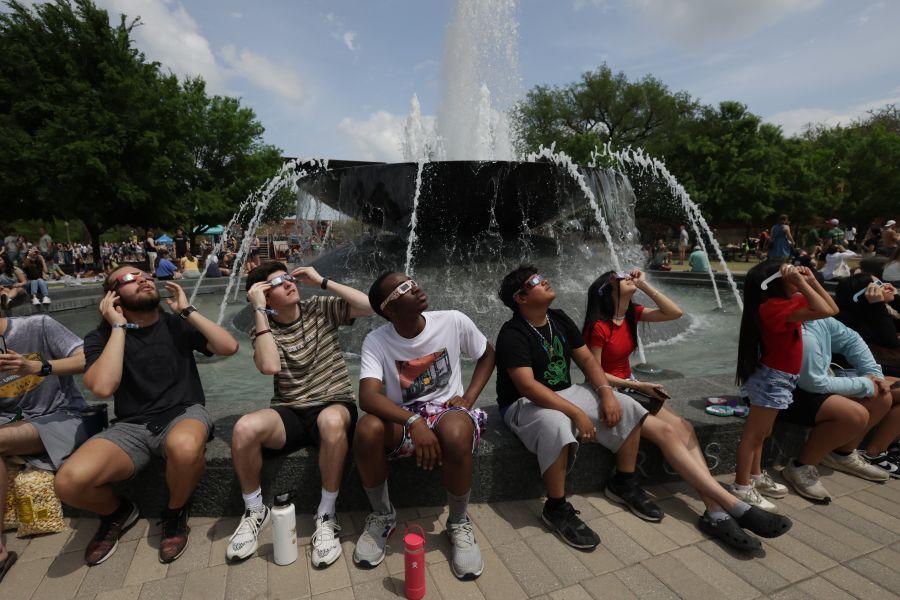
To examine the psychological effects of the April 2024 total solar eclipse, researchers conducted three studies involving more than 750 U.S. adults who viewed the celestial event. Participants completed surveys measuring positive and negative emotions, awe, fear and feelings of connectedness, with two studies comparing responses before and after the eclipse. Across all three studies, researchers also examined whether participants viewed the eclipse alone or with others, allowing them to determine how shared viewing experiences influenced emotional responses.
"One strength of our methodological approach is that participants reported viewing the total solar eclipse in-person and outside, instead of viewing photos or videos, increasing ecological validity. Awe and connectedness developed in people over centuries of experiences in situ (on site), not viewing photos or video clips on social media,” Foy said.
Importantly, the researchers found that people who later viewed the eclipse with others were not already more positive or more awe-prone before the event, strengthening the conclusion that the shared viewing experience amplified the emotional impact.
Eclipse Study's Top 4 Findings
1. Viewing the April 2024 total solar eclipse increased positive emotions and awe.
Across three studies, adults who viewed the eclipse reported higher positive affect and awe after the eclipse than before it, while negative emotions remained low.
2. Experiencing the eclipse with other people amplified the emotional impact.
The study's most significant and novel finding was that people who viewed the eclipse with others experienced greater awe, positive emotions and connectedness than those who viewed it alone. In fact, the effect remained even after researchers ruled out the possibility that people who chose group viewing were already happier beforehand.
3. The eclipse fostered feelings of social connection
Researchers found that the experience was not simply personally inspiring, but also socially meaningful as viewers reported feeling connected to others and to something larger than themselves. The findings also align with theories of "collective awe" and "collective effervescence," in which significant group experiences strengthen social bonds.
4. The findings help explain why eclipse crowds react so enthusiastically.
The study provides empirical evidence for the excitement often seen at eclipse gatherings, where people cheer, applaud and celebrate together during totality.
"Because total solar eclipses are rare – occurring only a few times in a human lifetime – community events at night to view the stars or planets could approximate the perceptual vastness and need for accommodation necessary to elicit awe. Myriad natural wonders abound, as does art, music and inspiring acts of everyday kindness, that all increase awe,” the researchers wrote. “[Social psychologist Dacher] Kelter advises making a habit of finding awe in everyday life. We further advise finding awe with others, and savoring the experiences, to boost day-to-day self-transcendence and build enduring social connections."
The next opportunity to view a total solar eclipse will occur on Aug. 2, 2027, with a path of totality crossing through southern Spain, North Africa and parts of the Middle East.
ABOUT THE AUTHORS
The study was led by Foy, along with colleagues Monica Weedman, Ph.D. ’26, Jordan Marr, B.A. ’23, lab manager of the Social-Personality Psychology Lab, Barbara G. Castanheira, Ph.D., assistant professor of physics and astronomy, Jo-Ann C. Tsang, Ph.D., professor of psychology, and Wade C. Rowatt, Ph.D., professor of psychology.
ABOUT BAYLOR UNIVERSITY
Baylor University is a private Christian University and a nationally ranked Research 1 institution. The University provides a vibrant campus community for 20,000 students by blending interdisciplinary research with an international reputation for educational excellence and a faculty commitment to teaching and scholarship. Chartered in 1845 by the Republic of Texas through the efforts of Baptist pioneers, Baylor is the oldest continually operating University in Texas. Located in Waco, Baylor welcomes students from all 50 states and more than 100 countries to study a broad range of degrees among its 12 nationally recognized academic divisions. Learn more about Baylor University at www.baylor.edu.
ABOUT THE COLLEGE OF ARTS & SCIENCES AT BAYLOR UNIVERSITY
The College of Arts & Sciences is Baylor University’s largest academic division, consisting of the School of Earth and Environmental Sciences and 24 academic departments in the sciences, humanities, fine arts and social sciences, as well as 12 academic centers and institutes. The more than 5,000 courses taught in the College span topics from art and theatre to religion, philosophy, sociology and the natural sciences. The College’s undergraduate Unified Core Curriculum, which routinely receives top grades in national assessments, emphasizes a liberal education characterized by critical thinking, communication, civic engagement and Christian commitment. Arts & Sciences faculty conduct research around the world, and research on the undergraduate and graduate level is prevalent throughout all disciplines. Visit the College of Arts & Sciences website.