

Spring Forward, Sleep Smarter: How a ‘When-Then’ Plan Can Ease the Shift of Daylight Saving Time
Baylor sleep researchers find that sleep education coupled with a brief “When-Then” goal-setting exercise can lead to better sleep
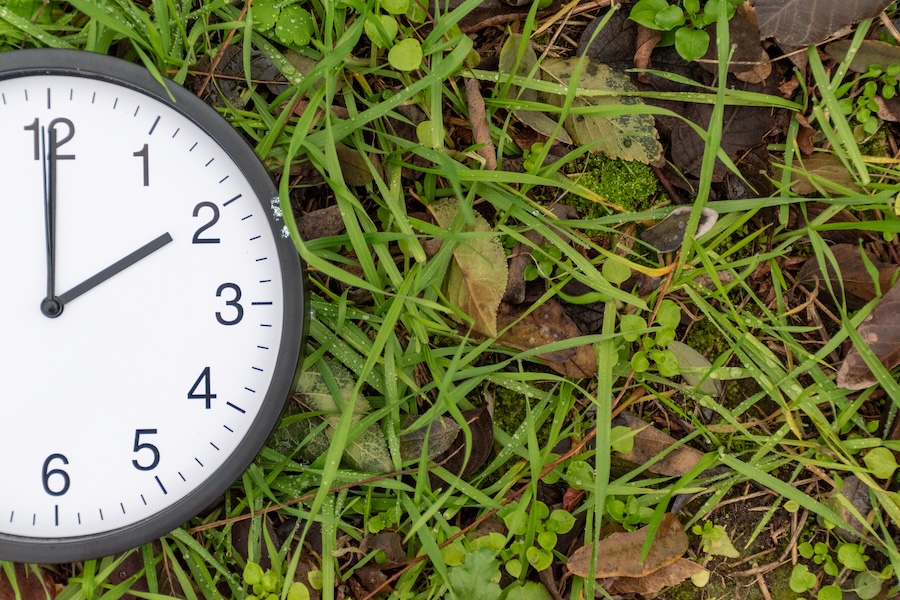
Credit: Daniel Tamas Mehes / Collection: iStock / Getty Images Plus
Contact: Shelby Cefaratti-Bertin, 254-327-8012
Follow us: @BaylorUMedia on X and LinkedIn
Can learning about sleep actually lead to getting better sleep? Baylor University sleep expert Michael K. Scullin, Ph.D., professor of psychology and neuroscience, says yes – but only when paired with a “When-Then” plan to actively change sleep habits. With clocks “springing forward” at 2 a.m. Sunday, March 8, for daylight saving time, now is a perfect time to learn more about the small changes that can lead to big benefits for the quality of our sleep.
In recent research published in the Journal of Clinical Sleep Medicine, Scullin and co-author, Blake Barley, Ph.D., a post-doctoral fellow in the Sleep Neuroscience and Cognition Lab at Baylor, show that learning about sleep alone rarely leads to behavior change. Instead, it takes a theory-driven goal-setting exercise, known as the “implementation intention,” to make sleep education more effective with the added benefit of better sleep. And who doesn’t want to get a good night’s sleep?
“One reason why people don't sleep well could be that they just don't know how important sleep really is, or they don't know how to go about getting better sleep,” Scullin said. “And if that's the case, then an obvious solution is to just teach people about sleep.”
However, that knowledge alone rarely results in meaningful changes to sleep habits.
“This challenge is broadly known as the knowledge behavior gap,” Scullin said. “You can know that something is good for your health, it's important for you, but you still don't behave in that way.”
The “When-Then” plan
So how do you bring the two together – really understanding the process and benefits of sleep and taking active steps to sleep better? Scullin and Barley tested whether a brief, theory-driven goal-setting exercise – the “implementation intention” – through a “When-Then” structure could make sleep education more effective and lead to improved sleep.
The strategy involves adding specific parameters to sleep goals, such as: “When it is 11 p.m., then I will put my phone away and go to bed.”
“We found in our research that when we added the implementation intention – the When-Then – we saw objective changes to sleep, we saw objective changes to bedtimes, people went to bed earlier and we saw objective changes to total sleep amounts,” Scullin said.
Daylight saving effects
It’s a good time of year to focus on changing sleep habits, especially as making the change to daylight saving time can disrupt sleep routines.
A one-hour “spring forward” may seem like a small shift, but it has significant effects on sleep and daily functioning, Scullin said. The sudden shift disrupts circadian rhythms, and some people may have difficulty adjusting to a new sleep schedule for several nights. Parents, in particular, may face challenges as children resist going to bed an hour earlier than their internal clocks expect.
"When you couple this bedtime difficulty with the fact that most people have morning school and work schedules that require them to wake up at a set time, it becomes clear that ‘springing forward’ has a broader consequence than skipping a single hour, Scullin said.
Some additional consequences, according to research, includes changes in cognitive functioning, increased driving accidents, moodiness and willingness to punish others for mistakes.
How to adjust
Combining the “When-Then” plan with our understanding of the importance of sleep can ease the effects of the spring time change.
Scullin suggests four changes to make the transition easier.
- Adjust in advance. Before you "spring forward," start going to bed 15 or 20 minutes earlier each day to ease into the new schedule.
- Avoid long naps. When you need a nap, take it earlier in the day and for no more than 20 minutes.
- Bring on the sunlight. When you wake up, let natural sunlight into your rooms to help reset your biological clock – even on cloudy days.
- Practice healthy nutrition. If you consume caffeine or alcohol, be aware of how much you are consuming so it does not negatively impact your body’s ability to rest.
ABOUT MICHAEL K. SCULLIN, PH.D.
Michael K. Scullin, Ph.D., is a professor of psychology and neuroscience at Baylor University, where his translational cognitive science research aims to connect laboratory-based findings to real world challenges. He is interested in how people use memory to fulfill daily intentions (a special kind of memory called “prospective” memory), including whether reminder apps and other technological solutions can reduce prospective memory difficulties in older age and the early stages of Alzheimer’s disease. He is the principal investigator of Baylor’s Sleep Neuroscience and Cognition Laboratory, which investigates how sleep contributes to learning, cognition, well-being and human flourishing across the adult lifespan. His work is supported by the National Institute on Aging, National Science Foundation, and private foundations.
ABOUT BAYLOR UNIVERSITY
Baylor University is a private Christian University and a nationally ranked Research 1 institution. The University provides a vibrant campus community for 20,000 students by blending interdisciplinary research with an international reputation for educational excellence and a faculty commitment to teaching and scholarship. Chartered in 1845 by the Republic of Texas through the efforts of Baptist pioneers, Baylor is the oldest continually operating University in Texas. Located in Waco, Baylor welcomes students from all 50 states and more than 100 countries to study a broad range of degrees among its 12 nationally recognized academic divisions. Learn more about Baylor University at www.baylor.edu.
ABOUT THE COLLEGE OF ARTS & SCIENCES AT BAYLOR UNIVERSITY
The College of Arts & Sciences is Baylor University’s largest academic division, consisting of 25 academic departments in the sciences, humanities, fine arts and social sciences, as well as 11 academic centers and institutes. The more than 5,000 courses taught in the College span topics from art and theatre to religion, philosophy, sociology and the natural sciences. The College’s undergraduate Unified Core Curriculum, which routinely receives top grades in national assessments, emphasizes a liberal education characterized by critical thinking, communication, civic engagement and Christian commitment. Arts & Sciences faculty conduct research around the world, and research on the undergraduate and graduate level is prevalent throughout all disciplines. Visit the College of Arts & Sciences website.