

Preserving a Legacy: Inside Baylor University’s Black Gospel Archive
BGA team discusses the legacy, significance and future of safeguarding Black sacred music
Baylor Photography: Robert Rogers
Contact: Shelby Cefaratti-Bertin, 254-327-8012
Follow us: @BaylorUMedia on X and LinkedIn
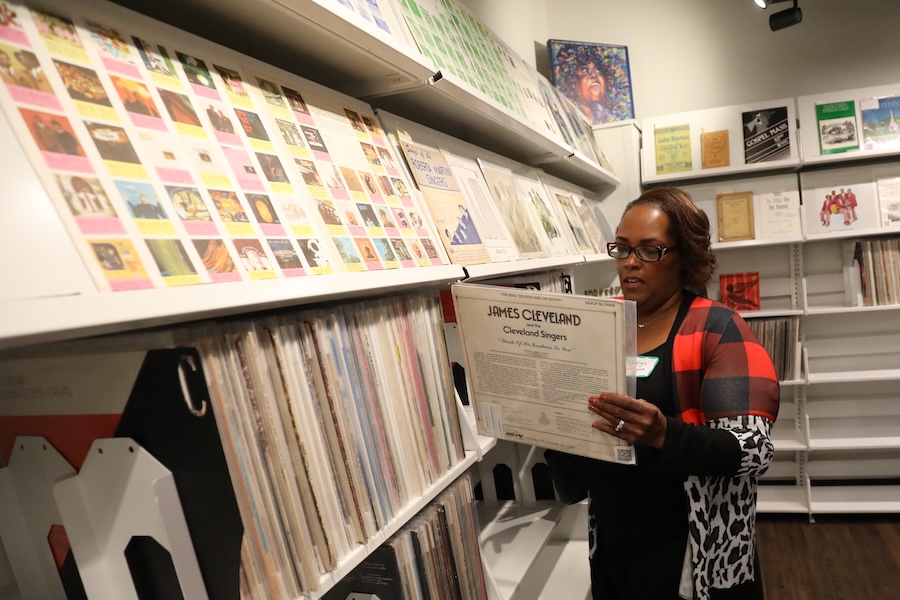
From its humble beginnings in a library basement 20 years ago, Baylor University’s Black Gospel Archive (BGA) has grown into one of the world’s most significant programs dedicated to preserving Black sacred music and cultural history. Through its work to identify, collect, digitize and share rare gospel recordings, sermons, sheet music and other artifacts, the BGA safeguards materials once in danger of being lost forever.
Housed within the Baylor Libraries, the BGA includes the Black Gospel Music Preservation Program (BGMPP), the Black Gospel Archive & Listening Center, the Black Gospel Music Royce-Darden Digital Collection and the Black Gospel Preachers Project. Through continued investment and major grant support, the BGA is expanding its collection, programming and research capabilities, solidifying its role as a national leader in documenting and sharing the history, artistry and enduring spiritual impact of Black gospel music.
It takes a team of dedicated professionals to bring the work of the BGA to life. In this Q&A, Stephen Newby, D.M.A., The Lev H. Prichard III Endowed Chair in the Study of Black Worship, ambassador for the BGA and professor of music; Darryl Stuhr, director of the BGA; and Hannah Engstrom, digital project curator, share their insights on Black gospel music, the importance of the Black Gospel Archive and this music means for Black Americans and the future of the program.
Q: What is Black gospel music, and what distinguishes it from other forms of spiritual music?
Newby: Black Gospel is the Good News of Jesus Christ! It is the music’s essence, energies and materialities that deliver the liberating evangelistic message of Jesus. This is different than other forms of spiritual music. As Gospel music historian and theorist/theologian Horace Clarence Boyer says, Black Gospel music “is a music that reflects the personal religious experience of the African American community, using the musical and rhetorical devices of the Black church – call and response, syncopation, improvisation, hand-clapping and foot-stomping – to convey the message of the Gospel." And today’s Gospel music composers continue to expand on these performance practice traditions.
Q: How did Black gospel music evolve historically, and what social or cultural forces shaped its development?
Newby: In Black Cultural Codes, African American Scholar and composer William Banfield writes that "all Black music carries the embodiment of Black artistic cultural codes.” While modern non-Black cultural norms often emphasize a value system based on sensory gratification, entertainment and speed, the Negro Spiritual is at the core of all Black Music and Black gospel carries that foundation within it.
Black gospel music resists those external pressures and is grounded in a biblical worldview. It serves as both worship and cultural witness – maintaining societal relevance, shaping spiritual formation and guiding public ministry. As Black gospel music and her creative artists continue to evolve, its purpose is not consumeristic; it is to embrace the artistic languages of the times, so that the gospel of Jesus Christ remains central for every evolving generation, dwelling well with the Wise Creator God.
Q: What obstacles make preserving gospel music more challenging today?
Stuhr: Unfortunately, a lot of recordings – especially independently produced or locally distributed ones – have been lost due to being thrown out, damaged or simply overlooked. Some of the rarer recordings are now ending up in the hands of private collectors, which makes them harder to access and more expensive. Another challenge is finding individuals and families who have Black gospel collections and encouraging them to loan or donate their materials. And then, as artists, producers and community members grow older, we risk losing their firsthand stories and context unless we are able to document them in time.
Q: Why is gospel such a vital part of Black history and Black expressive culture?
Newby: This Black Gospel musical art form continues to serve as the community’s spiritual gaze, gleam and guidepost. Through the trials and tribulations of Black people, historically and socially, this music functions as an epicenter for Black cultural life. Black Gospel music is a continuum of an extension of Black liberation thought, presence and embodiment of Christian Worship.
Q: Can you share an example of a meaningful discovery or restoration that illustrates the power of preservation?
Engstrom: Last year, we acquired the Saviour Home Library, a subsidiary of Ball Records, from the collection’s co-producer. This collection of LPs features recordings by Black gospel artists and choirs from the Los Angeles area, many of which are unique to this archive. Shortly before we traveled to Winnetka, California, where the materials were being stored, wildfires broke out nearby, placing the collection at immediate risk. In addition to the threat of fire, the recordings were vulnerable due to their storage conditions and the possibility of being discarded. Had any of these circumstances occurred, the music could have been lost entirely, as much of it exists nowhere else outside of select Ball Records releases. The Saviour Home Library is an important representation of the flourishing Black gospel music scene in Los Angeles, and preserving it ensures these recordings remain accessible for future research and listening.
Q: What would be lost if these songs and recordings were not actively archived in the BGA?
Newby: These works of musical artistic expression have the power to lift us to quintessential expressions of faith, hope and love. Without this music, our artistic vision of expression and embodiment of the Gospel of Jesus Christ would be lost. We would lose this incredible treasury – this art form of yesteryear – these ancient-future artifacts that help to shape and form future artistic expression of Black people. Wherever there are stories to tell, there are songs to sing. Black Gospel Music decrees and declares that Jesus Christ is redeemer, liberator and preserver of all good things. We want to preserve this good work of the ministry. This is our work at BGA. May God Be Glorified for the World!
Q: How does the BGA contribute to the preservation of culture for Black Americans?
Newby: The stories of Black folks speak to conquests over evil and the re-telling stories of hope for all generations, instructing us to live harmoniously with each other. As many nations wrestle with human-generated atrocities, these victorious stories are relevant for the world, Pro Mundo, bringing hope and encouragement to the nations. These songs come from stories of deliverance from oppression. The music lifts our spirits to persevere in times of trouble, and it teaches us how to carry the burdens of our neighbors and strangers. For we were once strangers ourselves with a Holy God. And God reached out to humanity, saving us from destruction and despair.
Q: What can someone expect to experience when visiting the BGA at Baylor?
Engstrom: When you visit the BGA, you can expect a welcoming environment where you can explore our expansive collection of Black gospel music. You can listen to materials in their original analog formats in our sound isolation booth or through the digital collection on computers in the space. Staff members are always available to answer questions and assist our visitors in locating specific materials.
Q: How do you envision the future of the BGA?
Stuhr: We want to keep growing the collection and promoting awareness so the BGA can truly become the definitive hub for Black Gospel Music – a space that is already a dedicated, research-ready facility equipped for instruction, small concerts and archival storage. We are also focused on bringing in more visiting researchers, expanding on how the collection is used in courses and building more partnerships with collaborators across the globe.
ABOUT THE BAYLOR LIBRARIES’ BLACK GOSPEL ARCHIVE
The Black Gospel Archive (BGA) encompasses the Baylor Libraries’ numerous programs, projects, archival collections, and resources that identify, collect, preserve, and make accessible Black sacred materials. The BGA was born from the Black Gospel Music Preservation Program, a nationally recognized effort that, since its founding in 2005, has preserved and made publicly available thousands of Black Gospel recordings. Learn more about the BGA and its programs on the Baylor Libraries’ website.
ABOUT BAYLOR UNIVERSITY
Baylor University is a private Christian University and a nationally ranked Research 1 institution. The University provides a vibrant campus community for 20,000 students by blending interdisciplinary research with an international reputation for educational excellence and a faculty commitment to teaching and scholarship. Chartered in 1845 by the Republic of Texas through the efforts of Baptist pioneers, Baylor is the oldest continually operating University in Texas. Located in Waco, Baylor welcomes students from all 50 states and more than 100 countries to study a broad range of degrees among its 12 nationally recognized academic divisions. Learn more about Baylor University at www.baylor.edu.