

Phone-Free Schools: Baylor Expert Says Restrictions Can Restore Student Focus
Thoughtful school phone policies can improve student engagement, behavior and well-being
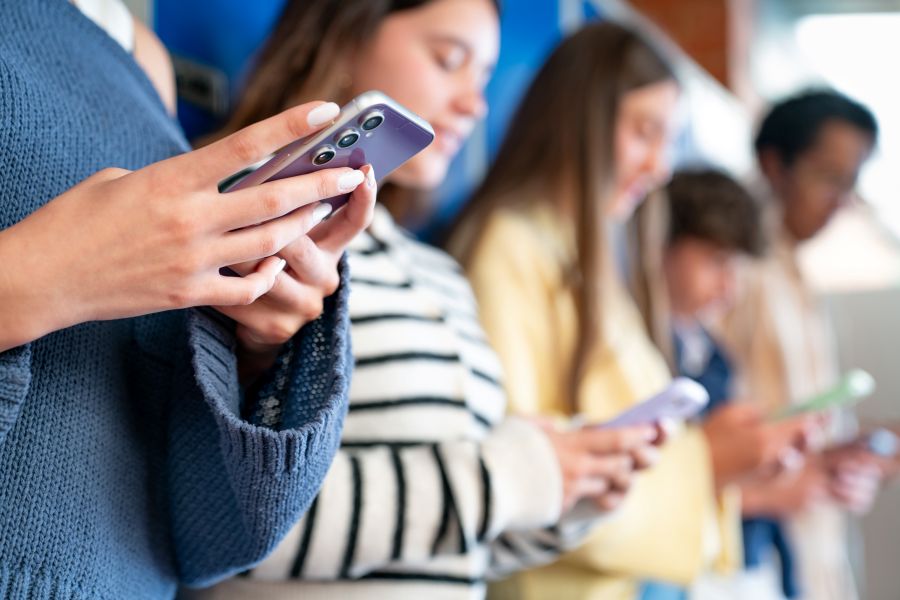
Photo credit (Getty Images: Hispanolistic)
Contact: Kelly Craine, 254-297-9065
Follow us: @BaylorUMedia on X and LinkedIn
From buzzing notifications to social media, mobile phones constantly compete for students’ attention. Even when a device is not being used, its presence can interfere with classroom learning and face-to-face interaction, said William L. Sterrett, Ph.D., professor and chair of educational leadership in Baylor University’s Moody School of Education.
Schools across the country are taking action with increasingly restrictive cellphone policies, including Texas, where House Bill 1481 requires public school districts and open-enrollment charter schools to prohibit students from using personal communication devices on school property during the school day, with exceptions for certain medical and educational needs.
Sterrett, a former middle school teacher and elementary school principal, said the goal of phone-free campuses should not be to reject technology but to determine when it supports learning and when it interferes.
“If I’m talking to you and I suddenly look at my phone, it sends a signal that there’s something else competing for my attention,” Sterrett said. “The key in schools is deciding when we put away technology so students can be more engaged and when we leverage technology so students can be more engaged. Both require thoughtful leadership.”
Improvements in behavior and engagement
Early feedback suggests restrictions can improve the school environment. Observations shared by principals with Sterrett have noted that students are eating more of their lunches, talking with classmates and participating in activities instead of looking at screens.
Schools also are introducing popular table games such as Uno and Connect 4 to encourage social interaction. Other principals have reported fewer fights, particularly those staged or prolonged so students could record them. Sterrett sees a teaching opportunity for leadership-focused courses.
“If you can see a significant shift in classroom behavior and student engagement, then we’re winning,” Sterrett said. In his doctoral-level organizational leadership class, Sterrett often interviews school and district leaders who are leading change efforts. He interviewed Dr. Buckley, an assistant superintendent in Killeen ISD, who helped implement phone-free schools one year before the Texas statewide mandate. Sterrett replies, “These sorts of real-time leadership case studies are impactful for our doctoral students.” For example, Dr. Buckley shared a leadership perspective that “The key was not simply adopting a phone-free policy, but doing the organizational work in advance to establish clear expectations and procedures and, of course, strong communication with families.” These leadership perspectives can help district and school administrators navigate any number of changes.
Emergency situations
One common concern is whether students can contact their families during an emergency. Sterrett said schools must clearly explain their emergency procedures and maintain reliable alert systems. During a crisis, hundreds of students calling or texting family members could spread incomplete or conflicting information.
“The onus is on schools to ensure their alert systems are in place to give parents a streamlined, coherent message,” Sterrett said.
HB 1481 allows for exceptions for students who require a device through an individualized education program, Section 504 plan or documented medical need. Districts also can determine how devices are stored, including classroom storage systems or locking pouches.
Ultimately, Sterrett said, successful policies require clear communication, consistent enforcement and strong leadership.
“We need to readjust our expectations about what is truly urgent during the school day,” he said. “Putting phones away gives students a better opportunity to focus, connect with one another and fully engage in learning.”
ABOUT WILLIAM L. STERRETT, PH.D.
William L. Sterrett, Ph.D., serves as department chair and professor of educational leadership at Baylor University, where he holds The Fred & Edith Hale Endowed Chair for School Leadership in the Moody School of Education. He is an affiliate faculty member of the Baylor Center for School Leadership. His research focuses on school improvement, including sustainable green schools and districts, digital principals and technology-savvy superintendents, and collaborative school leadership.
ABOUT BAYLOR UNIVERSITY
Baylor University is a private Christian University and a nationally ranked Research 1 institution. The University provides a vibrant campus community for 20,000 students by blending interdisciplinary research with an international reputation for educational excellence and a faculty commitment to teaching and scholarship. Chartered in 1845 by the Republic of Texas through the efforts of Baptist pioneers, Baylor is the oldest continually operating University in Texas. Located in Waco, Baylor welcomes students from all 50 states and more than 100 countries to study a broad range of degrees among its 12 nationally recognized academic divisions. Learn more about Baylor University at www.baylor.edu.
ABOUT THE BAYLOR MOODY SCHOOL OF EDUCATION
For more than 100 years, the Moody School of Education has advanced Baylor University’s mission across the globe while preparing students for a range of careers focused on education, leadership and human development. With more than 70 full-time faculty members, the School’s growing research portfolio complements its long-standing commitment to excellence in teaching and student mentoring. Baylor’s undergraduate program in teacher education has earned national distinction for innovative partnerships with local schools that provide future teachers deep clinical preparation. Likewise, the Moody School of Education’s graduate programs have attained national recognition for their exemplary preparation of research scholars, educational leaders, innovators and clinicians. Visit the Moody School of Education website to learn more.