

How Adult Daughters Make Sense of Strained Mother Relationships
Baylor research explores how adult daughters explain, manage and survive low-quality mother-daughter relationships

(Photo Credit: Getty Images/GoodLifeStudy
Contact: Kelly Craine, 254-297-9065
Follow us: @BaylorUMedia on X and LinkedIn
WACO, Texas (February 3, 2026) – For many people, the mother-daughter bond is assumed to be one of life’s most enduring and supportive relationships. But for some women, that bond is marked by emotional distance, conflict or long-standing strain – realities that are often overlooked or misunderstood.
A new study by Allison M. Alford, Ph.D., clinical associate professor of business communication at Baylor University and a team of researchers from Chapman University examines how adult daughters from low-income backgrounds make sense of and manage low-quality relationships with their mothers, revealing the emotional labor and agency daughters bring to these complex family dynamics.
Published in Personal Relationships, the peer-reviewed journal of the International Association for Relationship Research, the study applies attribution theory – a framework used to understand how people explain others’ behavior – to long-term family relationships, offering new insight into how daughters interpret, respond to and cope with relational strain.
Daughters as active decision-makers
Traditionally, research on mother-daughter relationships has focused on mothers’ roles and behaviors, often portraying daughters as passive recipients. This study flips that lens.
Through in-depth interviews with adult daughters, Alford found that daughters are active sense-makers, continually evaluating their mothers’ behavior and making strategic choices about communication, boundaries and emotional involvement – a process scholars describe as “daughtering.”
Rather than simply reacting, daughters assess why their mothers act as they do and decide how – or whether – to engage.
The participants in the study described their relationship status with their mothers very honestly.
- “It’s not safe for me to be vulnerable. I have to keep an emotional distance.”
- “I’m not like her, and I’ve had to accept that in order to protect my own well-being.”
- “I’ve felt like I was the parent most of my life. I should’ve never felt that way.”
- “She was my egg donor, not my mother.”
Explaining the “why” behind the relationship
Using attribution theory, the researchers examined four key ways daughters interpret their relationships:
- Locus of control: whether daughters see their mothers’ behavior as shaped by internal traits or external circumstances
- Responsibility: who is seen as at fault – and who must manage the relationship
- Stability: whether behaviors are perceived as temporary or enduring
- Specificity: whether the relationship is viewed as uniquely strained or part of broader family or cultural patterns
Many daughters in the study attributed relational problems to stable, internal characteristics of their mothers, such as emotional unavailability or defensiveness, which led them to expect little change over time. Others pointed to external factors like trauma, poverty or substance abuse, expressing empathy without necessarily believing the relationship would improve.
“Attributions are not simply a way to explain behavior, but the organizing principle through which daughters assess emotional durability in the relationship,” Alford said.
Carrying the burden of repair
One of the study’s most striking findings is that even when daughters blame their mothers for the strain, they often feel personally responsible for managing the relationship.
Participants in the study described avoiding conflict, limiting contact, maintaining emotional distance or “being the bigger person” to keep peace – strategies driven by guilt, obligation or fear of future regret. This emotional labor was especially pronounced among daughters from low-income backgrounds, where limited access to external support can intensify family dependence.
“When daughters see their mothers as unable or unwilling to change, they don’t disengage emotionally because they don’t care,” Alford said. “They disengage because they are trying to protect their own well-being.”
Redefining what it means to be a daughter
For many study participants, attribution-making became a way to reclaim agency and redefine identity – distinguishing who they are from patterns they experienced growing up, the researchers said. Setting boundaries, reducing contact or reframing expectations allowed daughters to remain connected on their own terms, rather than through cultural ideals of unconditional closeness.
The findings challenge simplistic narratives about family bonds and underscore the importance of recognizing strained parent-child relationships as real, lasting and deserving of understanding, Alford said.
Why this research matters
By extending attribution theory to long-term family relationships, the study provides a more nuanced framework for understanding adult daughters’ experiences – particularly those shaped by socioeconomic stress.
The research has implications for mental health professionals, family counselors and support organizations, offering language and insight that validate daughters’ experiences while highlighting the invisible labor involved in maintaining difficult family ties.
In doing so, the study invites a broader conversation about family, responsibility and what healthy boundaries can look like when love and pain coexist.
ABOUT ALLISON M. ALFORD, PH.D.
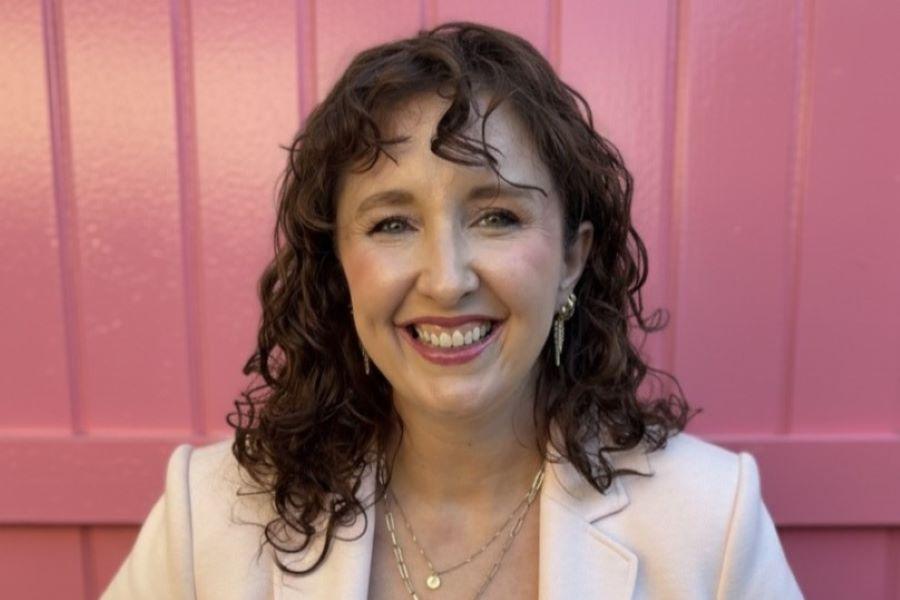
Allison M. Alford, Ph.D., clinical associate professor of business communication at Baylor University’s Hankamer School of Business, studies how adult daughters shoulder what she calls the “invisible labor” of maintaining family unity. Her research focuses on the active role of “daughtering” – the intentional ways daughters relate to and care for their parents – and highlights her work on Substack, Instagram and her website daughtering101.com. She is author of the upcoming book, “Good Daughtering” (Dey Street Books, an imprint of Harper Collins Publishers, February 2026).
ABOUT THE AUTHORS
In addition to Dr. Alford, the team included researchers from Chapman University in Orange, California.
- Denise Alonso-Pecora, M.S., Chapman University
- Crystal Nguyen, M.A., Ph.D. student, Chapman University
- Jennifer Bevan, Ph.D., Chapman University
- Michelle Miller-Day, Ph.D., Chapman University
ABOUT BAYLOR UNIVERSITY
Baylor University is a private Christian University and a nationally ranked Research 1 institution. The University provides a vibrant campus community for 20,000 students by blending interdisciplinary research with an international reputation for educational excellence and a faculty commitment to teaching and scholarship. Chartered in 1845 by the Republic of Texas through the efforts of Baptist pioneers, Baylor is the oldest continually operating University in Texas. Located in Waco, Baylor welcomes students from all 50 states and more than 100 countries to study a broad range of degrees among its 12 nationally recognized academic divisions. Learn more about Baylor University at www.baylor.edu.
ABOUT THE HANKAMER SCHOOL OF BUSINESS
Baylor University’s Hankamer School of Business strives to further God’s kingdom through the realm of business, using God-given gifts and academic talents to do so. Faculty and students conduct purposeful research and participate in experiential learning opportunities, all while operating in a Christ-centered mission. Undergraduate students can choose from 13 major areas of study. Graduate students can earn their MBA on their terms, either through the full-time, online or a Dallas-based executive program. The Business School also offers three Ph.D. programs in Information Systems, Entrepreneurship or Health Services Research. The School’s top-ranked programs make up approximately 25% of the University’s total enrollment. Visit the Hankamer School of Business website for more information.