

Go Outside and Play: The Benefits of Outdoor Play for All Ages
Baylor expert shares how outside play improves health, creativity and connection
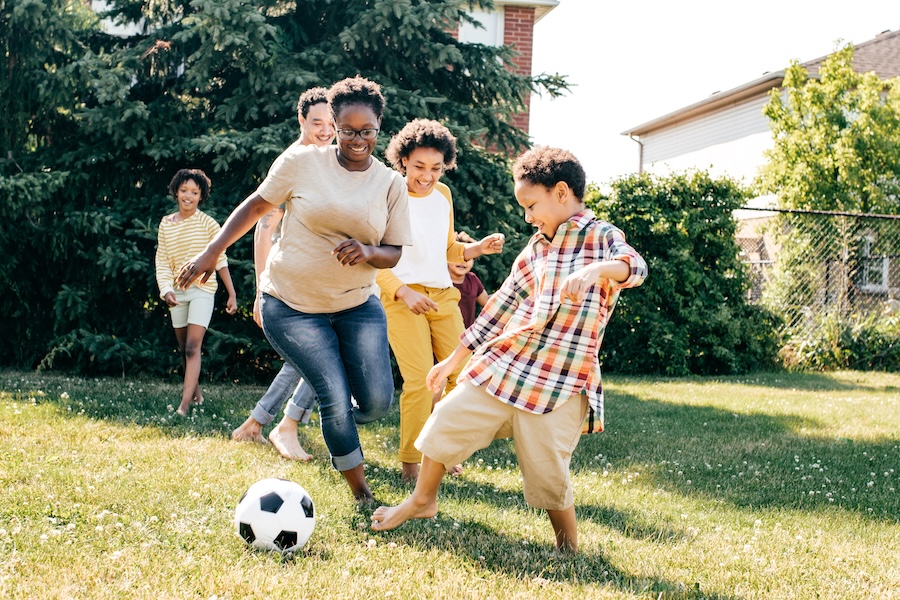
Credit: kate_sept2004 / Getty Images / Collection: E+
Contact: Shelby Cefaratti-Bertin, 254-327-8012
Follow us: @BaylorUMedia on X and LinkedIn
The simple act of playing outside offers a multitude of interconnected benefits, profoundly enhancing physical, mental and cognitive well-being. Healthy living expert Renée Umstattd Meyer, Ph.D., professor of public health in Baylor University’s Robbins College of Health and Human Sciences, recommends making outdoor play a regular part of your family’s routine, especially during the summertime when kids are out of school and schedules are typically lighter.
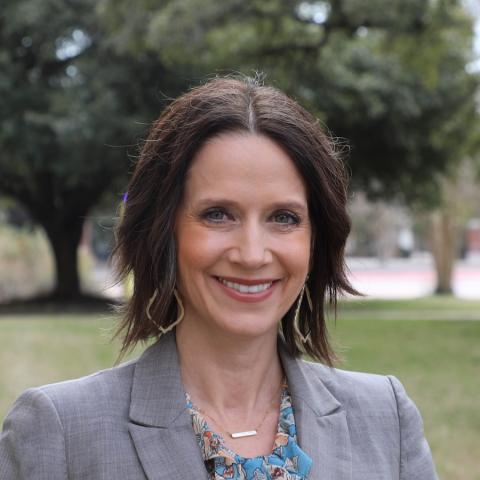
“Being outdoors is an equalizer, or at least it can be. Nature offers a lot of opportunities, and there are benefits to all types of being outside, whether it be yards, parks or driveways bordered by trees,” Umstattd Meyer said. “Going outdoors does not require a sign-up fee or certain types of equipment; it is just there waiting for visitors.”
Umstattd Meyer’s research focuses on promoting health and access to opportunities for healthy living through an active living lens by collaborating to foster healthy and active opportunities and lifestyles for all people. The benefits of simply being outside, she says, increase through the combination of five factors: movement, connection with nature, connection with others, a reset from busy school schedules and a sense of community.
Movement
Outdoor play gets kids moving, which inspires creativity, critical thinking and exploration. And research bears that out, Umstattd Meyer said, showing that exercise and physical activity, even in relatively shorter bouts, help with concentration, problem-solving, learning and memory.
“Being outdoors beckons us to move our bodies, for kids to run, cartwheel, spin and twirl, play chase, build pill-bug houses, chase lightning bugs, start a pick-up game, and for adults, to walk, exercise, play with our kids, pull a few weeds out of a flower bed, plant and tend to a vegetable, herb or flower garden,” she said.
Connection with nature
Time outdoors offers well-documented physical and mental benefits, increases awareness and can evoke a sense of environmental stewardship, Umstattd Meyer said.
“Just being in nature, whatever the nature might be, from a driveway with a little green around it to local parks, offers those same benefits and connection,” she said.
Connection with others
Spending time outside also helps people reconnect and step away from the number of devices and screens that contribute to feelings of loneliness and isolation.
“Outdoor play also allows opportunities for connection with others, from family members and friends to neighbors,” Umstattd Meyer said. “It provides time and space for adults to connect with others as well, to build relationships, familiarity and trust.”
Reset from the schedules
Summer play can provide a break from the structured routines of the school year, but Umstattd Meyer said that it requires intentionality.
“Taking a break from the planned and orchestrated schedules and demands of the school year and associated stressors, along with a break from screens and devices, will actually foster curiosity and creative thought, opportunities for critical analysis and awareness of caring for our natural surroundings and the environment,” she said.
Fosters a sense of community
Outdoor play not only benefits children’s health and development, but it also creates natural opportunities for families to build connections and strengthen neighborhood relationships, Umstattd Meyer said.
“Being outside with our kids gives us the opportunity to say hello and get to know our neighbors,” she said. “It also allows for parents to become more comfortable with their kids being outside while becoming more acquainted with neighbors, to build confidence that their kids are capable of exploring their surroundings and the outdoors.”
Umstattd Meyer encourages everyone to find outdoor spaces and engage in play, which can be planned or spontaneous and is freely chosen at any age.
“Play is pursued for enjoyment and recreation rather than serving a serious or practical purpose and enhances health, happiness and quality of life,” Umstattd Meyer said.
While technology has improved people’s daily lives, it also has contributed to reduced social connection and engagement with the natural world, she said. At the same time, Americans of all ages are experiencing higher levels of stress and anxiety over demands for higher productivity and achievement.
“I encourage each of us to create the time to enjoy nature and plan for ways to regularly engage in outside play in a way that allows you to connect with others and physically move your body,” Umstattd Meyer said.
ABOUT RENÉE UMSTATTD MEYER, PH.D.
Renée Umstattd Meyer, Ph.D., B.S.Ed. ’00, professor of public health and Senior Associate Dean of Research and Graduate Education in Robbins College of Health and Human Sciences at Baylor University, focuses her research on promoting health and access to opportunities for healthy living through an active living lens. She collaborates with communities using mixed methods to understand cultural context and advance approaches and policies to foster healthy and active opportunities and lifestyles for all people. Much of Umstattd Meyer’s work centers on partnerships with rural communities and families, supported by federal, foundation and local sponsors. She led the Rural Hub of the CDC-funded Physical Activity Policy Research and Evaluation Network (PAPREN) for ten years, is a Fellow of the Society of Behavioral Medicine, and a Fellow and Past-President of the American Academy of Health Behavior, a multidisciplinary society of health behavior scholars and researchers.
ABOUT BAYLOR UNIVERSITY
Baylor University is a private Christian University and a nationally ranked Research 1 institution. The University provides a vibrant campus community for 20,000 students by blending interdisciplinary research with an international reputation for educational excellence and a faculty commitment to teaching and scholarship. Chartered in 1845 by the Republic of Texas through the efforts of Baptist pioneers, Baylor is the oldest continually operating University in Texas. Located in Waco, Baylor welcomes students from all 50 states and more than 100 countries to study a broad range of degrees among its 12 nationally recognized academic divisions. Learn more about Baylor University at www.baylor.edu.
ABOUT ROBBINS COLLEGE OF HEALTH AND HUMAN SCIENCES AT BAYLOR UNIVERSITY
Established in 2014, Robbins College of Health and Human Sciences seeks to enhance health, quality of life and human flourishing for all individuals and communities through education, research and innovation. It includes six academic departments – Communication Sciences and Disorders; Health, Human Performance, and Recreation; Human Sciences and Design; Occupational Therapy; Physical Therapy; and Public Health – along with the Division of Health Professions, which houses the Master of Physician Assistant Studies program. Robbins College offers 13 bachelor’s degrees, 10 master’s degrees and six doctoral degrees, as well as nine graduate programs in partnership with the U.S. Army. Graduate programs in Robbins College are offered in a variety of modalities, including on campus, online and hybrid. For more information, visit the Robbins College website.