

College Students Are Getting Less Restful Sleep Than They Did 20 Years Ago
Baylor-led research finds dramatic shift in sleep for college students, raising concerns about mental health, academic performance and long-term well-being

Credit: Kateryna Onyshchuk / Collection: iStock / Getty Images Plus
Contact: Shelby Cefaratti-Bertin, 254-327-8012
Follow us: @BaylorUMedia on X and LinkedIn
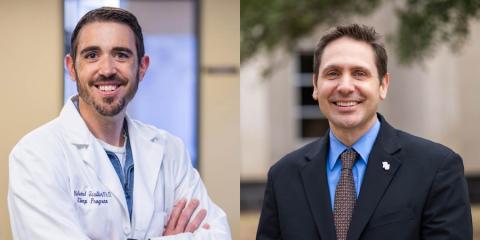
While all-night study sessions may seem like the norm during college, new research from Baylor University’s Michael K. Scullin, Ph.D., professor of psychology and neuroscience, and Jason R. Carter, Ph.D., dean of Robbins College of Health and Human Sciences, finds that today's U.S. college students are getting fewer days of sufficient sleep than students did at the beginning of the 21st century – which could have significant implications for mental health, academic success and long-term health.
Published in the journal Sleep, the study used survey data collected by the American College Health Association from nearly 1.6 million full-time undergraduate students attending four-year colleges and universities across the United States between 2000 and 2023. From that data, the researchers discovered a notable shift in the proportion of students who report feeling rested only two days each week – from approximately 39% in 2000 to 60% in 2023.
"There are people who say college students have always pulled all-nighters and that nothing has really changed," Scullin said. "We had a unique opportunity with this study to determine whether this is accurate or not. We were able to ask a simple but powerful question: On how many days per week do you get sufficient sleep to feel rested?"
Feeling rested is vital to overall well-being and academic success, as it “allows students to learn, engage socially, participate in activities and perform at their best,” Scullin said.
During the early years of the study, from 2000 to 2008, students' sleep habits actually improved slightly. After 2008, however, reports of sufficient sleep began a steady decline that continued through 2019 before leveling off at a lower level through 2023.
"Early in the 21st century, this appeared to be good news," Scullin said. "Unfortunately, after 2008, it's mostly been a decline. In 2019, days of sufficient sleep hit a low point and have stayed there since then."
The findings correspond to the 2026 report in JAMA that sleep in U.S. teenagers declined during the 2010s. These converging patterns could reflect generation-related cultural differences, changes in youth mental health or impact from new technologies.
Impact on student health
These findings matter because poor sleep and lack of rest for the college student population are linked to a range of physical and mental challenges. At an age of perceived invincibility, these students are quite vulnerable, Carter said.
"The most immediate and costly implication of chronic sleep insufficiency at this age is its potential to negatively impact mental health," Carter said. "There are clear relationships between lack of sleep and common campus challenges such as anxiety, depression and loneliness. Poor sleep habits may also be setting the foundation for long-term cardiometabolic risks, including diabetes and hypertension later in life."
Scullin said the lack-of-sleep trends may be particularly significant given the broader rise in mental health concerns among young adults over the past decade.
"We know there's a bidirectional relationship between sleep and mental health," Scullin said. "Poor sleep increases risk for depression and anxiety, but those conditions can also worsen sleep. It's possible that declining sleep health is both reflecting and contributing to some of the challenges we're seeing in young adults today."
Only two nights of rest
One of the study's most striking findings involved students who reported getting sufficient sleep only two days per week, typically on the weekend. However, work and school days are the most important days when students need better quality sleep.
“This falls into a habit that a lot of us find ourselves caught in, thinking we can just catch up on the weekend,” Scullin said. “But the science doesn't back that up. It's not as simple as I'm going to be cutting back for five nights in a row, and then I'm going to be able to rebound sufficiently and feel rested. The nights that students most need to be rested are often the same nights when they're sleeping the least."
The need for sleep health education
The findings also provide evidence that higher education institutions have an opportunity to place greater emphasis on sleep health through education, campus culture and environmental design.
"You can walk across college campuses and see messages about nutrition and physical activity everywhere," Scullin said. "But you rarely see messaging about how to get optimal sleep or why nighttime sleep is so important. Sleep needs to become part of the wellness conversation."
Potential approaches include expanding sleep education, evaluating assignment deadlines and class schedules and creating residence hall environments that better support healthy sleep.
"I'm excited about the interdisciplinary work that Dr. Scullin and I are doing with colleagues across campus to address sleep issues upstream," Carter said. "That includes exploring innovative ways to make residence halls more sleep-friendly. These efforts could have meaningful and lasting effects on student learning, health and flourishing."
With college students returning to campuses for the fall semester, researchers hope the findings serve as a wake-up call about one of the most overlooked dimensions of student success.
"The trend of declining sleep sufficiency deserves public health attention," Scullin said. "Sleep isn't a luxury. It's a biological necessity that affects how students learn, feel and function every day."
FUNDING
This research was supported by the National Science Foundation (DRL 1920730 and CAREER 1943323).
Study co-authors include former Baylor psychology and neuroscience graduate student Blake K. Barley, Ph.D. ’24, and Allison E. Nickel, Ph.D., postdoctoral fellow in Baylor’s Sleep Neuroscience & Cognition Laboratory.
ABOUT BAYLOR UNIVERSITY
Baylor University is a private Christian University and a nationally ranked Research 1 institution. The University provides a vibrant campus community for 20,000 students by blending interdisciplinary research with an international reputation for educational excellence and a faculty commitment to teaching and scholarship. Chartered in 1845 by the Republic of Texas through the efforts of Baptist pioneers, Baylor is the oldest continually operating University in Texas. Located in Waco, Baylor welcomes students from all 50 states and more than 100 countries to study a broad range of degrees among its 12 nationally recognized academic divisions. Learn more about Baylor University at www.baylor.edu.
ABOUT THE COLLEGE OF ARTS & SCIENCES AT BAYLOR UNIVERSITY
The College of Arts & Sciences is Baylor University’s largest academic division, consisting of 25 academic departments in the sciences, humanities, fine arts and social sciences, as well as 11 academic centers and institutes. The more than 5,000 courses taught in the College span topics from art and theatre to religion, philosophy, sociology and the natural sciences. The College’s undergraduate Unified Core Curriculum, which routinely receives top grades in national assessments, emphasizes a liberal education characterized by critical thinking, communication, civic engagement and Christian commitment. Arts & Sciences faculty conduct research around the world, and research on the undergraduate and graduate level is prevalent throughout all disciplines. Visit the College of Arts & Sciences website.
ABOUT ROBBINS COLLEGE OF HEALTH AND HUMAN SCIENCES AT BAYLOR UNIVERSITY
Established in 2014, Robbins College of Health and Human Sciences seeks to enhance health, quality of life and human flourishing for all individuals and communities through education, research and innovation. It includes six academic departments – Communication Sciences and Disorders; Health, Human Performance, and Recreation; Human Sciences and Design; Occupational Therapy; Physical Therapy; and Public Health – along with the Division of Health Professions, which houses the Master of Physician Assistant Studies program. Robbins College offers 13 bachelor’s degrees, 10 master’s degrees and six doctoral degrees, as well as nine graduate programs in partnership with the U.S. Army. Graduate programs in Robbins College are offered in a variety of modalities, including on campus, online and hybrid. For more information, visit the Robbins College website.