

Baylor Junior Contributes to Published Study Aimed at Improving Heart Transplant Outcomes
University Scholar Abhinav Rajkumar joins researchers at Baylor College of Medicine and Texas Heart Institute for life-saving medical research
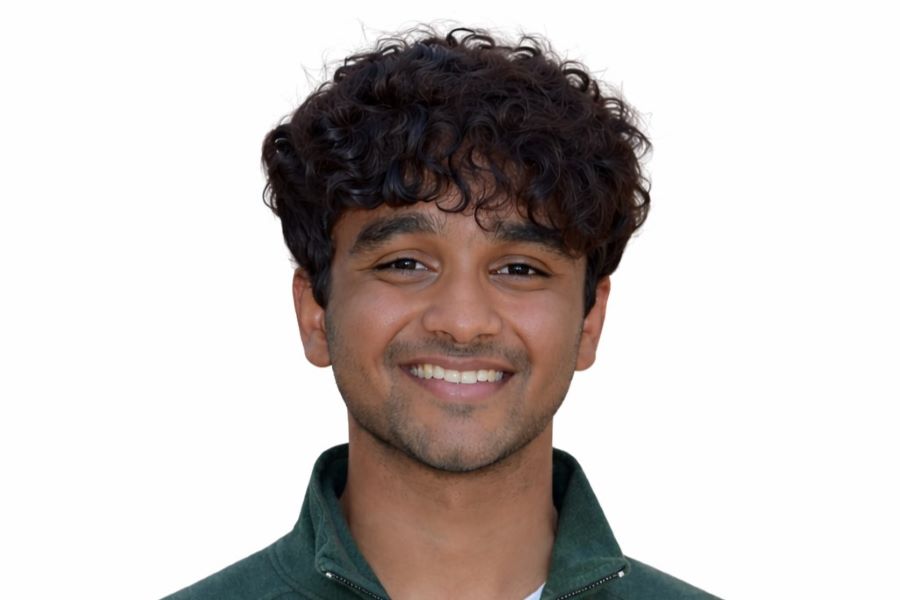
Abhinav Rajkumar, Baylor University Scholar (photo credit: Abhinav Rajkumar)
Contact: Kelly Craine, 254-297-9065
Follow us: @BaylorUMedia on X and LinkedIn
WACO, Texas (March 17, 2026) – A Baylor University Honors College student is helping advance research aimed at improving heart transplantation outcomes by studying how donor hearts can be better preserved after circulatory death.
University Scholar Abhinav Rajkumar, a junior from Frisco, Texas, contributed to a study led by researchers at Baylor College of Medicine and Texas Heart Institute, examining what happens to donor hearts during the critical period between circulatory death and transplantation. Published in The Journal of Thoracic and Cardiovascular Surgery, the research focused on warm ischemic time, the period when the heart is deprived of oxygen before it is cooled and preserved.
“During this window, the heart is highly vulnerable,” Rajkumar said. “Without oxygen, the myocardium undergoes ATP depletion, membrane damage and loss of ion balance, which can lead to irreversible injury.”
The study found that warm ischemia significantly compromises heart tissue and activates inflammatory cell death pathways, but preservation using Celsior solution may help reduce cellular damage when warm ischemic time is 30 minutes or less. Improving preservation techniques could help expand the number of donor hearts available for transplant.
Rajkumar, who is concentrating in biology, medical humanities, political science and sociology, joined the research team as a freshman after reaching out to investigators conducting clinical outcomes research. As a Summer Research Fellow at BCM, Rajkumar worked with Nandan K. Mondal, M.S., M.Phil., Ph.D., and contributed to molecular and data analysis of donor heart tissue, performing ELISA and Western blot assays to measure plasma membrane damage and inflammatory signaling.
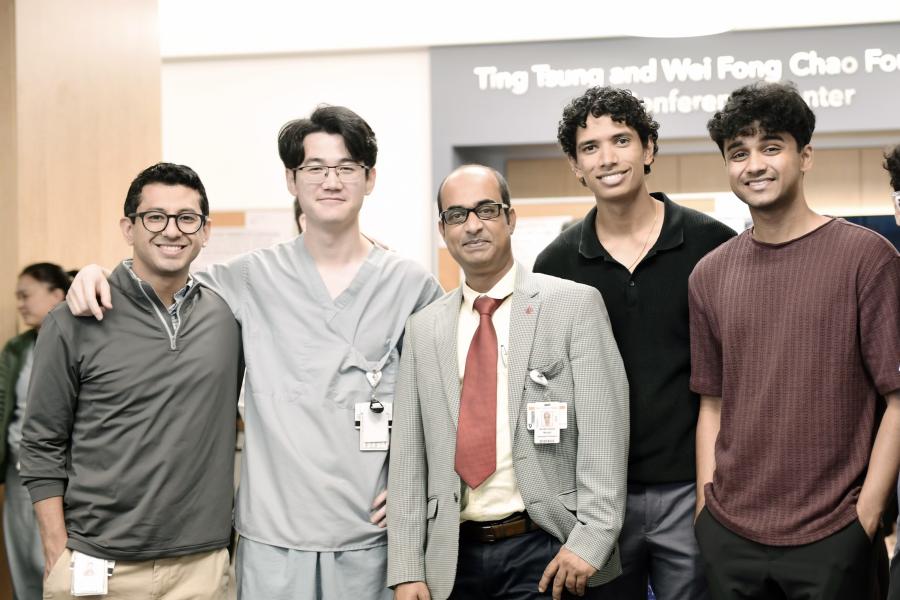
He also observed donor heart procurement surgeries at Houston Methodist Hospital, gaining firsthand insight into the connection between organ recovery and laboratory analysis.
Top undergraduate research opportunities
In the 2025 U.S. News & World Report rankings of America’s Best Colleges, Baylor University was ranked No. 40 nationally for providing students with opportunities for intensive and self-directed research, typically mentored by a faculty member, that results in an original scholarly paper or other product that can be formally presented on or off campus. For undergraduates like Rajkumar, this research is crucial for fostering innovation and addressing complex global challenges such as transplantation. For Baylor, it nurtures the next generation of physicians, scientists, scholars and leaders.
"Through my pre-med journey, I have encountered like-minded individuals interested in healthcare outcomes research,” Rajkumar said. “I firmly believe Baylor serves as an avenue to delve into this field of research and provides a network to focus on this research at other institutions."
Rajkumar is highly involved in the Baylor pre-health community and serves as vice president of the Student Health Advisory Council and Medical Service Organization. With plans to graduate from Baylor in May 2027, he said his undergraduate research experiences have reinforced his commitment to improving healthcare access through research and a future career in medicine.
“My parents immigrated from India to the United States to give my sister and me every opportunity to build meaningful, purpose-driven lives,” Rajkumar said. “Growing up, I frequently visited India and spent time with my grandfather, a retired general physician, where I was exposed early to hospital settings and witnessed the profound role medicine plays during people’s most vulnerable moments.”
Through his interest in healthcare outcomes, Rajkumar also joined the lab of Baylor researcher Samuel Urlacher, Ph.D., associate professor of anthropology. The Urlacher Lab investigates the evolved bio-energetic pathways that drive variation in human development, metabolism and health, with Rajkumar focusing on analyzing gut biomarkers, low market integration and environmental enteric dysfunction. He will present a first author abstract at the annual meeting of the Human Biology Association this month in Denver.
ABOUT BAYLOR UNIVERSITY
Baylor University is a private Christian University and a nationally ranked Research 1 institution. The University provides a vibrant campus community for 20,000 students by blending interdisciplinary research with an international reputation for educational excellence and a faculty commitment to teaching and scholarship. Chartered in 1845 by the Republic of Texas through the efforts of Baptist pioneers, Baylor is the oldest continually operating University in Texas. Located in Waco, Baylor welcomes students from all 50 states and more than 100 countries to study a broad range of degrees among its 12 nationally recognized academic divisions. Learn more about Baylor University at www.baylor.edu.
ABOUT THE HONORS COLLEGE AT BAYLOR UNIVERSITY
The Honors College at Baylor University unites five academic pathways: the Bachelor of Philosophy degree, the Great Texts major, the University Scholars major, the Baylor Interdisciplinary Core, and the Honors Program. Students may also choose to live in the Honors Residential College, a multi-year community of students that fosters formation through friendship, study, service, and spiritual engagement. Together these opportunities invite undergraduates to explore questions that reach beyond the boundaries of individual disciplines. For more information, visit the Honors College website.