

Baylor Expert Roundup – The Meaning of Friendsgiving
Baylor experts explore how holiday gatherings with friends strengthen relationships, foster support and create meaningful traditions
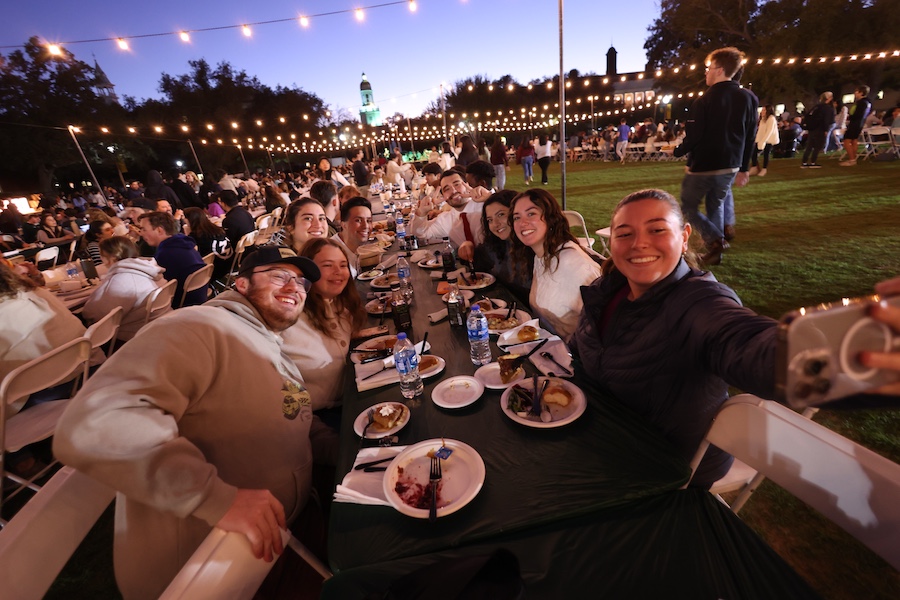
All University Thanksgiving is the University’s ultimate Friendsgiving celebration and a cherished annual tradition among students, faculty and staff. (Robert Rogers: Baylor Photography)
Contact: Shelby Cefaratti-Bertin, 254-327-8012
Follow us: @BaylorUMedia on X and LinkedIn
During the holiday season, there are many things to be thankful for, and friendship often ranks high on the list. As people gather around Thanksgiving tables, many extend the invitation beyond family to friends, neighbors and co-workers who feel like family. This expanded celebration of Thanksgiving, known as Friendsgiving, has become increasingly popular as either a complement to traditional Thanksgiving gatherings or an alternative celebration centered on chosen family and community.
The term “Friendsgiving” first appeared online in 2007, though the tradition has been reflected in popular culture for decades, from” A Charlie Brown Thanksgiving” (1973) to episodes of “Friends.” More than a holiday trend, three Baylor University researchers share what their fields reveal about how Friendsgiving fosters meaningful relationships, cultivates belonging and offers support during the holiday season.
Friendsgiving deepens friendships

Friendsgiving reflects an innate human need for connection and belonging, especially during a time when people seek to gather in celebration, says Sarah Varga, Ph.D., interpersonal communication researcher and lecturer in Baylor’s Department of Communication.
While friendships are essential to well-being, they are often our most fragile relationships, Varga says, because they are frequently based on shared interests or proximity. As a result, intentional gestures like hosting a Friendsgiving can fill relational needs and deepen relationships.
“We often feel a need to have an inner circle, that place where it feels like returning home for a holiday,” Varga said. “When people try to recreate that outside of their family of origin, it really signals to our friends that they feel important to us.”
Varga, who researches communication in dating relationships, says Friendsgiving serves an important prosocial function. Many of her research participants describe holiday gatherings with a partner’s friends or family as pivotal moments in their relationships. By bringing together the people who matter most, Friendsgiving can deepen connections, foster belonging and strengthen bonds that extend beyond the holiday season.
“What makes Friendsgiving special is that everyone is bringing in traditions and memories from their world as they grew up,” she said. “As people ask and talk about special memories, it increases depth of disclosure, and the relationships grow closer.”
Sharing the magic of Friendsgiving

As with any meaningful holiday gathering, Friendsgiving takes coordination and planning. The magic of the season is often the result of someone’s labor, whether preparing favorite dishes, decorating spaces or keeping traditions alive.
A nationally known researcher on the invisible labor of adult daughters, Allison M. Alford, Ph.D., in Baylor’s Hankamer School of Business, says Friendsgiving offers an opportunity to approach that work differently. As friends gather to celebrate, everyone has the chance to contribute to the magic and share responsibility for creating a meaningful experience.
“Think about how you can contribute beyond bringing a side dish. There’s mental labor involved in planning, coordinating and anticipating needs,” Alford said. “There’s emotional labor in making people feel welcome, included and cared for. There’s identity labor in creating meaningful traditions and in taking responsibility, and there’s task labor in cooking, decorating and cleaning. Participate in thinking, feeling, doing and being labor involved for Friendsgiving.”
For Alford, the most important part of Friendsgiving is the freedom to create a gathering that reflects the people around the table. Whether the celebration is traditional or unconventional, what matters most is create their own authentic traditions. Consider the Friendsgiving portrayed in “A Charlie Brown Thanksgiving”, where everyone shared popcorn and buttered toast instead of the traditional holiday meal.
Holidays like Thanksgiving can stir different emotions. Families may live far apart, and sometimes traveling home can be hard for reasons beyond distance. Friendsgiving provides another opportunity to recognize and celebrate those who support us throughout the year.
“We don’t have to expect one relationship, or even one family, to meet every emotional and social need we have,” Alford said. “Supportive friendships can offer perspective when family expectations feel overwhelming, to receive encouragement, and feel connected to people who care about our well-being.”
Symbolism and remembrance

For many people, holiday meals are about more than the food. Candi Cann, Ph.D., professor and a noted death and dying researcher in the Baylor Honors College, says celebratory feasts can remind us of loved ones and create space for those who are grieving this holiday season.
“Food is more than nourishment. It’s also symbolic of our culture, of our family and of our personal preferences,” Cann said. “While a turkey feast might have once symbolized familial abundance, now it might not hold meaning to individuals who have been socialized to only eat what they like. Friendsgiving meals often allow for more personalization and a ‘new’ twist on traditional hospitality rituals.”
Favorite recipes and certain dishes can become reminders of the people who made them, even after they are gone. Sharing those dishes with others can provide a sense of comfort and connection while creating new traditions with friends.
Cann says sharing stories and memories of loved ones can make grief feel less lonely. One of her favorite remembrance traditions is setting a place at the table with a framed photo or favorite object of the loved one who has died.
“Grief is what becomes of love when someone dies. It is not an ending, but a different way of loving someone who is no longer here,” Cann said. “Remembering the dead and sharing stories about them helps us know that we grieve because we were once loved, and they once loved us.”
ABOUT BAYLOR UNIVERSITY
Baylor University is a private Christian University and a nationally ranked Research 1 institution. The University provides a vibrant campus community for nearly 20,000 students by blending interdisciplinary research with an international reputation for educational excellence and a faculty commitment to teaching and scholarship. Chartered in 1845 by the Republic of Texas through the efforts of Baptist pioneers, Baylor is the oldest continually operating University in Texas. Located in Waco, Baylor welcomes students from all 50 states and more than 80 countries to study a broad range of degrees among its 12 nationally recognized academic divisions. Learn more about Baylor University at www.baylor.edu.