

Baylor Astrophysicists Among Partners on $30 Million NSF grant to Establish Turbulence Research Center
Led by Michigan State University, the NSF-funded consortium of eight research universities and five national labs will dramatically advance scientists’ ability to predict and control turbulence
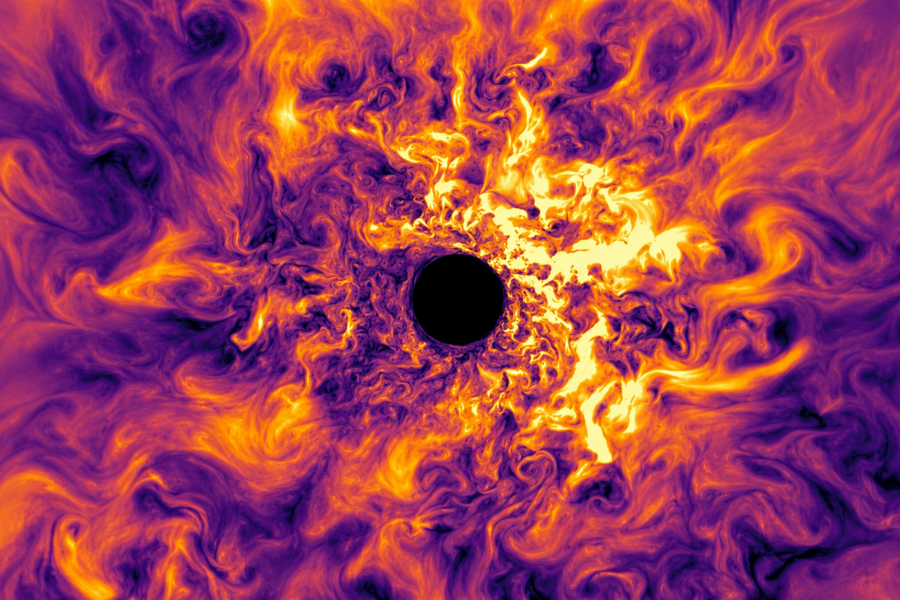
The turbulent velocity field from a 3D simulation of a massive star at the point of core collapse just prior to supernova explosion. (Credit: S. Couch based on results from Fields & Couch, Astrophysical Journal, 921, 28.)
Contact: Lori Fogleman, 254-709-5959
Follow us: @BaylorUMedia on X and LinkedIn
Leading dusty plasma researchers at Baylor University are part of a $30 million grant from the National Science Foundation to establish a new NSF Science and Technology Center (STC) focused on one of science’s most complex problems: understanding and controlling turbulence, which has applications including fusion energy, astrophysics and hypersonic flight.
Led by Michigan State University, the STC for Transformative Explorations in Multi-Physics and Engineering of Scientific Turbulence, or TEMPEST, brings together physicists, mathematicians, engineers and AI researchers, who will combine theory, computation, AI techniques and experimentation to build trustworthy predictive models of real-world turbulence for high-consequence applications.
Baylor astrophysicists Lorin Swint Matthews, Ph.D., and Truell W. Hyde, Ph.D., who lead one of the top dusty plasma labs in the world – Baylor’s Center for Astrophysics, Space Physics and Engineering Research (CASPER) – will lend their expertise to TEMPEST research through dusty plasma experiments and numerical modeling, collaborating alongside researchers at MSU, Auburn University, Georgia Institute of Technology, San José State University, Texas A&M University-Corpus Christi, University of Rochester and Yale University, as well as additional partners Los Alamos National Laboratory, Sandia National Laboratories, Lawrence Livermore National Laboratory, Pacific Fusion and General Atomics.
“Dr. Lorin Matthews, Dr. Truell Hyde and their colleagues in Baylor’s Center for Astrophysics, Space Physics and Engineering Research have built an internationally recognized program in dusty plasma research,” said Baylor’s Vice Provost for Research Kevin Chambliss, Ph.D. “Their expertise positions Baylor to make important contributions to TEMPEST as researchers work to better understand turbulence and its effects across a range of aerospace, physical science and engineering applications. We are excited to see Baylor join this outstanding interdisciplinary team.”
Unraveling the mysteries of turbulence
Turbulence is all around us — in the air we breathe, the water we drink, the storms moving across the atmosphere and the plasmas inside experimental fusion devices. It plays an essential role in how energy moves, how pollutants and heat spread through the ocean and atmosphere, how fluids move through chemical processing plants and how plasmas behave in extreme environments. A better understanding of turbulence – from tiny, microscopic interactions to massive atmospheric jet streams – could help researchers around the world address challenges in science and engineering.
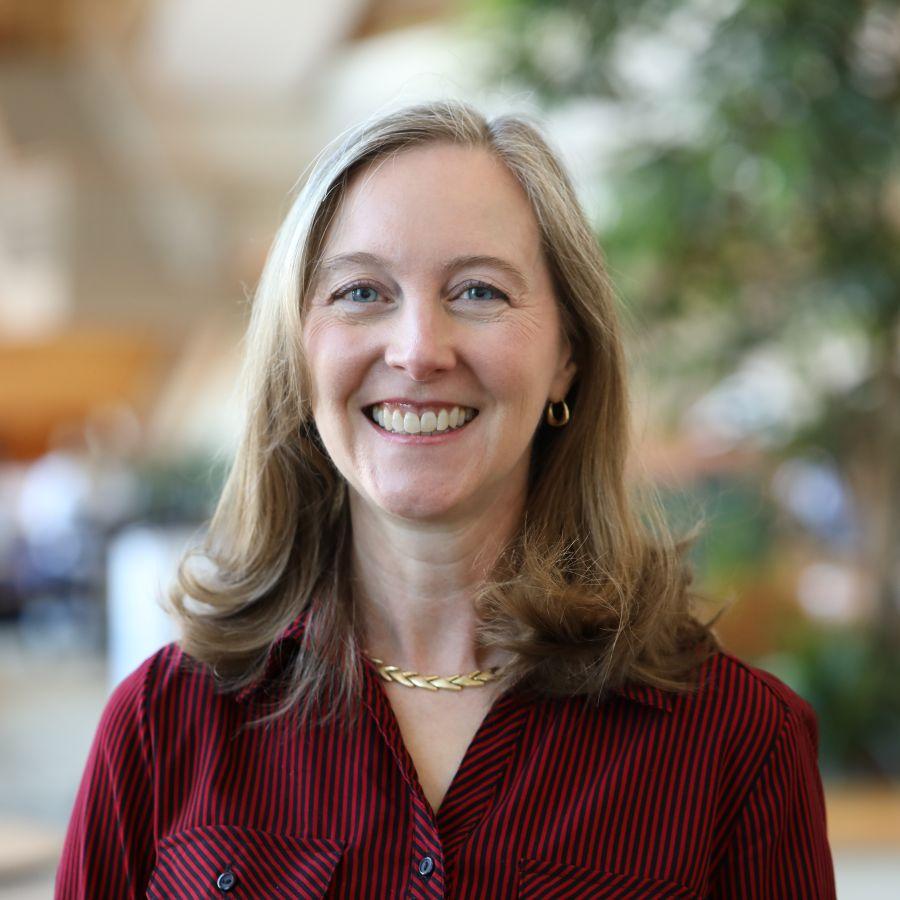
Dusty plasma is dust — tiny bits of rock and ice, 100 times smaller than the width of the human hair — interacting with plasma, the glowing, ionized gas that makes up more than 99% of our visible universe. Matthews focuses on the charging and dynamics of dust in astrophysical and laboratory plasma environments, which has applications ranging from the formation of planets to fusion energy.
“Turbulence is complicated because it occurs across such a large range of spatial scales that no one experiment or computer simulation can capture all of its features,” said Matthews, who is professor of physics, chair of the Department of Physics and Astronomy and CASPER’s associate director. “The TEMPEST consortium is connecting plasma physics, fluid dynamics, applied mathematics, experiments, scientific computing and artificial intelligence to fill in the links between different scales. This will help us to understand physical systems from how we can use fusion to provide clean energy to how supernovae disperse the building blocks of planets and life throughout the universe.”
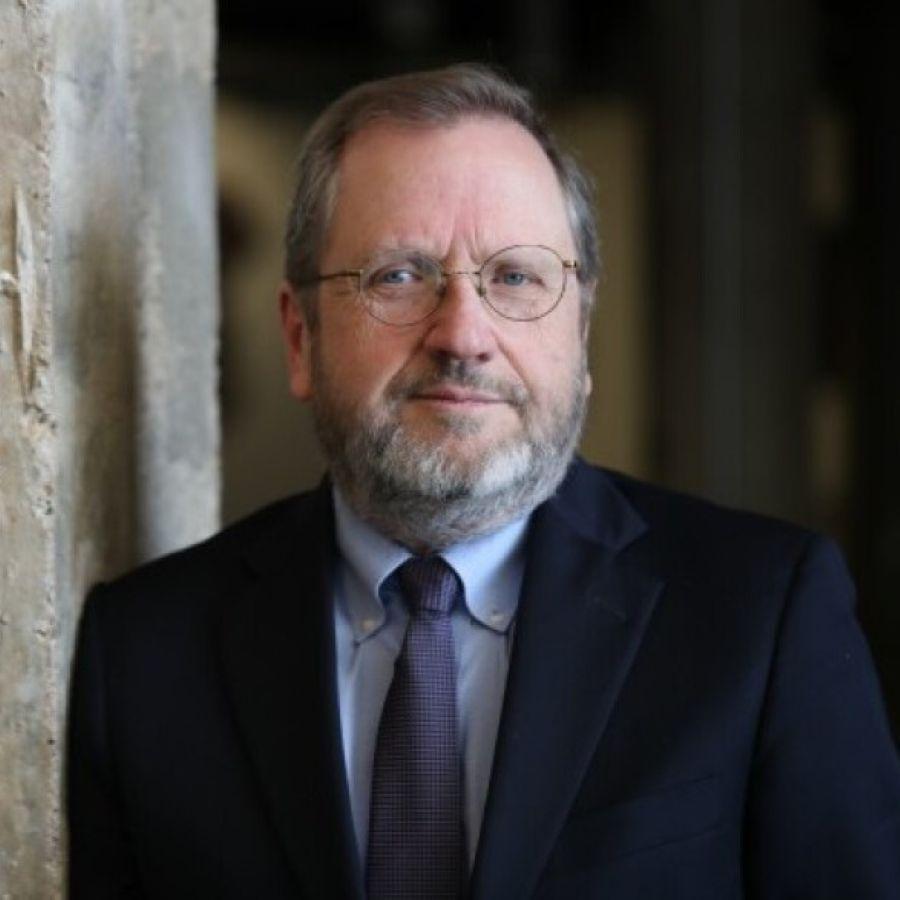
Matthews and Hyde have met regularly over the years with MSU theoretical and computational physicist Michael Murillo, most recently when Matthews and Murillo co-chaired the 2026 International Conference on Plasma Science (ICOPS).
Murillo shared an idea of using dusty plasma to track individual particle motion as a dust cloud transitions from laminar (steady) to turbulent flow. Hyde, emeritus professor of physics at Baylor and CASPER’S founder and director, understood Murillo’s vision of an experiment where dust is continually driven around a track with varying conditions. He developed the first prototype of the “Dusty Plasma Racetrack,” which will be used to jump start the research for the TEMPEST STC.
Innovation, education and economic impact
The center’s impact will extend well beyond Baylor, strengthening the Texas and Central Texas economy, particularly the Texas Triangle, America’s fastest-growing megaregion, through federal research investment, workforce development and innovation. As the region grows to an estimated 47 million residents over the next 25 years, Baylor is positioned to meet its evolving needs by creating new opportunities for students and researchers to engage with the challenges and possibilities around them, all while benefiting neighboring communities.
“TEMPEST is set up to provide workshops and cross-disciplinary training for undergraduate and graduate students between the partner institutions, national labs and industry, providing a rich educational experience with a seamless pathway to the workforce,” Matthews said. “Not only will Baylor undergraduate and graduate students be involved in TEMPEST research, carrying out experiments and numerical modeling, but they also will be engaged in outreach to the community to explain the exciting physics behind turbulence.”
ABOUT BAYLOR UNIVERSITY
Baylor University is a private Christian University and a nationally ranked Research 1 institution. The University provides a vibrant campus community for 20,000 students by blending interdisciplinary research with an international reputation for educational excellence and a faculty commitment to teaching and scholarship. Chartered in 1845 by the Republic of Texas through the efforts of Baptist pioneers, Baylor is the oldest continually operating University in Texas. Located in Waco, Baylor welcomes students from all 50 states and more than 100 countries to study a broad range of degrees among its 12 nationally recognized academic divisions. Learn more about Baylor University at www.baylor.edu.
ABOUT THE COLLEGE OF ARTS & SCIENCES AT BAYLOR UNIVERSITY
The College of Arts & Sciences is Baylor University’s largest academic division, consisting of the School of Earth and Environmental Sciences and 24 academic departments in the sciences, humanities, fine arts and social sciences, as well as 12 academic centers and institutes. The more than 5,000 courses taught in the College span topics from art and theatre to religion, philosophy, sociology and the natural sciences. The College’s undergraduate Unified Core Curriculum, which routinely receives top grades in national assessments, emphasizes a liberal education characterized by critical thinking, communication, civic engagement and Christian commitment. Arts & Sciences faculty conduct research around the world, and research on the undergraduate and graduate level is prevalent throughout all disciplines. Visit the College of Arts & Sciences website.