

Seasonal Safety: Baylor Alert, Weather Tracking Help Keep Campus Weather Aware
Baylor’s Office of Emergency Management uses multiple tools and multi-tiered communications to keep campus informed during severe weather
Credit: ronniechua / iStock / Getty Images Plus
Contact: Shelby Cefaratti-Bertin, Baylor University Media & Public Relations, 254-327-8012
Follow us on Twitter: @BaylorUMedia
As summer fades and cooler temperatures roll in, fall in Texas ushers in more than just football games and pumpkin patches – it also marks the second peak season for severe weather in the state. While spring storms often steal the spotlight, fall severe weather can include intense thunderstorms accompanied by lightning, hail, damaging winds, heavy rainfall and an elevated risk of tornadoes. Staying aware of these potential threats is crucial for safety, especially as weather patterns shift unpredictably during this transitional time.
The Office of Emergency Management within Baylor University’s Department of Public Safety (BUDPS) stays ahead of potential weather issues on or near campus through a strong partnership with the National Weather Service in Fort Worth/Dallas and early lightning detection with Earth Networks Lightning Alert System. If a storm turns dangerous and the NSW issues a tornado warning or flash flood emergency, BUDPS will quickly activate the multi-tiered Baylor Alert emergency notification system to alert the Baylor community on actions to take to stay safe from dangerous weather.
“The fall is the region's second most active period of the year for severe weather, including tornadoes,” said George Nuñez, director of emergency management at Baylor. “We need to be ‘weather aware’ and remain vigilant during periods of severe weather.”
Baylor Alert
The Baylor Alert system provides important information and instructions for students, faculty, staff and visitors for all types of hazards, including severe weather. When additional information is available, BUDPS will share further instructions, such as “seek secure shelter immediately” or shelter-in-place.
Baylor Alert uses multiple avenues to communicate, including:
- Outdoor Warning System (Main Waco Campus Only), which encompasses outdoor sirens and voice activation, which were recently upgraded to provide greater clarity and range;
- Baylor Alert email notification to Baylor email account (from baylor@email.getrave.com)
- Baylor Alert text message to cellphone
- Audio message to a cellphone or other telephone
- Notices on Baylor’s main website (www.baylor.edu)
- Official Baylor social media channels: Facebook, X (formerly Twitter) and Instagram
- Audio recording on the Baylor Information Line at 254-710-4411
“Any emergency message that we distribute using any of these systems provides clear instructions as to what incident it is and the next steps to take. Anyone on campus, even visitors, need to be aware of what to do in case of an emergency,” Nuñez said.
Students, faculty and staff are automatically opted in to receive Baylor Alert emergency notifications. Visitors can register to receive Baylor Alerts while on campus:
- Short-term visitors (1-3 days) can text Baylor1845 to 226787. *Note, subscriptions automatically expire after three days.
- Long-term visitors (weeks, months, semester, etc.) can text Baylor76798 to 226787. *Note, subscriptions do not automatically expire. Users need to opt-out to stop receiving notifications.
Tornado Watch vs. Tornado Warning
With a campus of nearly 20,000 students, including close to 40% from outside of Texas, understanding the difference between a tornado watch and a warning is critical, Nuñez said.
“A watch is when the atmospheric conditions are favorable for tornado activity, but a warning is when a tornado has been sighted or indicated by radar,” he said. “If a tornado warning is issued, it is important to quickly seek shelter indoors, away from doors and windows with smartphone access to follow additional notifications and information through the Baylor Alert system.”
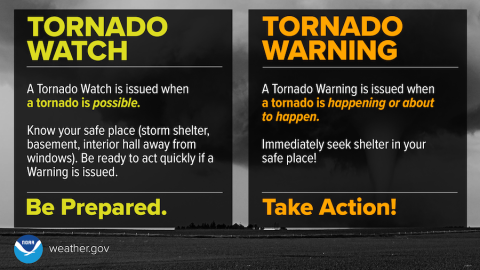
It’s just as important to Be Weather Ready during fall storm season in Central Texas. Nuñez encourages Baylor students, faculty and staff to discuss their emergency plans, review Baylor’s tornado safety procedure guide and take these advance actions:
- Check supplies, make sure your phone is charged and check the safe space in your home, apartment or residence hall.
- If you live in a Baylor residence hall, make sure you know where your Severe Weather Assembly Area is in your hall. These areas are identified on Building Emergency Plan maps throughout each building and also available via an online map.
- Be ready to act quickly if a warning is issued or you suspect a tornado is approaching.
Lightning detection
In addition to the Baylor Alert system, Baylor’s lightning alert system – in partnership with Earth Networks – consists of a lightning detector, audible tone and flashing strobe to alert individuals of lightning threats within an eight-mile radius. The automated outdoor alerting system for lightning covers various outdoor recreational and athletic locations.
The University monitors severe weather using three safety radiuses:
- 30 miles – Monitor storms and path;
- 15 miles – Prepare to take action;
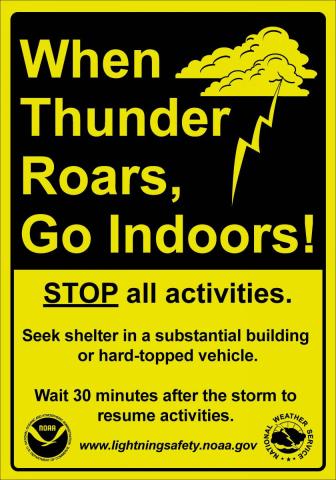
- 8 miles - If lightning is detected within the eight-mile safety radius, any outdoor Baylor events taking place – including athletic events – are paused and the venue is cleared. The event can resume 30 minutes after the last lightning strike was detected within the eight-mile safety radius.
“Thunderstorms are powerful, and lightning is a significant threat,” Nuñez said. “A great reminder from the National Weather Service that we encourage on campus is ‘When Thunder Roars, Go Indoors!’"
To ensure all Outdoor Warning Systems are ready, Baylor joins city and county partners for regular joint testing of tornado sirens at 10 a.m. on the first Friday of each month. If there is a weather-related emergency – including a tornado warning where a tornado is imminent – Baylor, the city and county will activate their outdoor sirens to alert the public to take action to stay safe. Additionally, Baylor will activate the Baylor Alert emergency notification system.
Additional information about emergency preparedness at Baylor is available on the Baylor Emergency Management website.
ABOUT BAYLOR UNIVERSITY
Baylor University is a private Christian University and a nationally ranked Research 1 institution. The University provides a vibrant campus community for more than 20,000 students by blending interdisciplinary research with an international reputation for educational excellence and a faculty commitment to teaching and scholarship. Chartered in 1845 by the Republic of Texas through the efforts of Baptist pioneers, Baylor is the oldest continually operating University in Texas. Located in Waco, Baylor welcomes students from all 50 states and more than 100 countries to study a broad range of degrees among its 12 nationally recognized academic divisions.
ABOUT BAYLOR UNIVERSITY DEPARTMENT OF PUBLIC SAFETY
The Baylor University Department of Public Safety serves as an umbrella department for the Baylor University Police Department, emergency management, physical and technical security and parking and transportation. BUDPS is set on providing students, faculty and alumni with excellent security and safety through instant notification systems, extensive surveillance cameras and highly trained staff.