

From Krampus to the Yule Cat: How Darkness Defines Holiday Cheer
Baylor professor explains how ancient fears and folklore shaped the modern Christmas imagination
Credit: Henglein and Steets / Collection: Connect Images
Contact: Shelby Cefaratti-Bertin, 254-327-8012
Follow us: @BaylorUMedia on X and LinkedIn

When you think of Christmas today, you probably imagine twinkling lights, warm fires and a mug of hot cocoa. But those snug traditions are actually recent additions to Christmas lore. For centuries, Christmas came with a much darker – and eerier – side.
While researching the history of Christmas traditions, Baylor University’s Michael P. Foley, Ph.D., uncovered many forgotten Christmas customs and folklore, including those “scary ghost stories” alluded to in the 1963 holiday classic, “It’s The Most Wonderful Time Of The Year.”
Taking a closer look at the darker side of Christmas, with its presence of these winter ghouls and ghosts, can help us find a deeper appreciation for the wonder and joy of the season. - Michael Foley, Ph.D.
Ghost stories at Christmas have been around for centuries, and Foley said that taking a closer look at the darker side of Christmas, with its presence of these winter ghouls and ghosts, can help us find a deeper appreciation for the wonder and joy of the season.
The lyrics in “It’s The Most Wonderful Time Of The Year” – “There'll be scary ghost stories, And tales of the glories of, Christmases long, long ago” – offer one of the few modern-day nods back to this darker time of Christmas. While those lyrics may sound whimsical today, they are based in historical and profound truth: Christmas was not always the purely sentimental season of “sugar plums dancing in our heads,” Foley said.
Season of peril and hardship
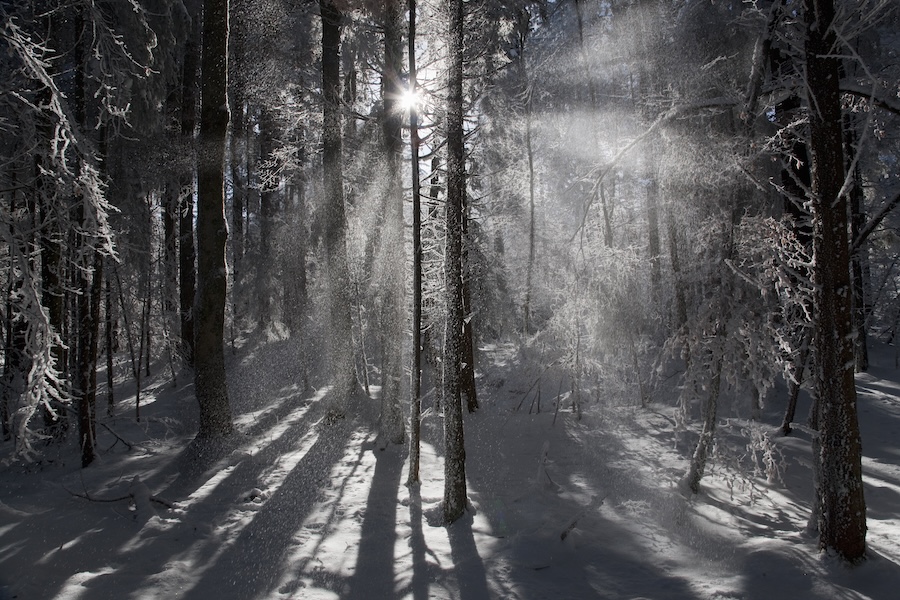
Before Christmas became the heartwarming celebration we know today, winter was a season of peril and hardship. Long nights, bitter cold and food scarcity made it a time when evil was thought to roam freely.
Even the biblical telling of Christmas itself involves fear, uncertainty and the threat of death.
“After a stressful night seeking lodging for a woman in labor, the Infant Jesus is born in a foul stable and hunted by murderous henchmen,” Foley said.
This is hardly the idyllic scene of modern holiday cards. For long-ago ancestors, winter was “a dreadful season that involved a constant fight against the cold and a struggle to stay fed,” Foley said. Survival, not celebration, was the dominant theme.
Mythology and the Winter Solstice
Pre-Christian European mythology portrayed winter as a time when evil prevailed. The nights were long, weather was cold and crops had died off. The Winter Solstice brought a season when demons, ghosts and witches were said to be active. These beliefs persisted, shaping the folklore that still lingers in cultural memory, Foley said.
“Today, Halloween is the one night a year for ghouls,” Foley said. “For the Celts, it was merely opening day of a long and dark season that would last until Spring.”
Brutal characters of Christmas
In response to the fear of the darker months, a cast of terrifying Christmas characters populate the season, bringing with them both benevolence and brutality, Foley said. European folklore is full of these spirits, including a variety of goblins, ghosts and even werewolves, most of whom are tasked with terrorizing misbehaving children. Some of the most memorable include:
- Berchta and Lutzelfrau (Germany) are witch-like figures who sometimes bring gifts and sometimes disembowel disobedient boys and girls.
- Père Fouettard (France), Hans Trapp (Alsace-Lorraine) and Schmutzli (Switzerland)are all associated with abducting and devouring naughty children.
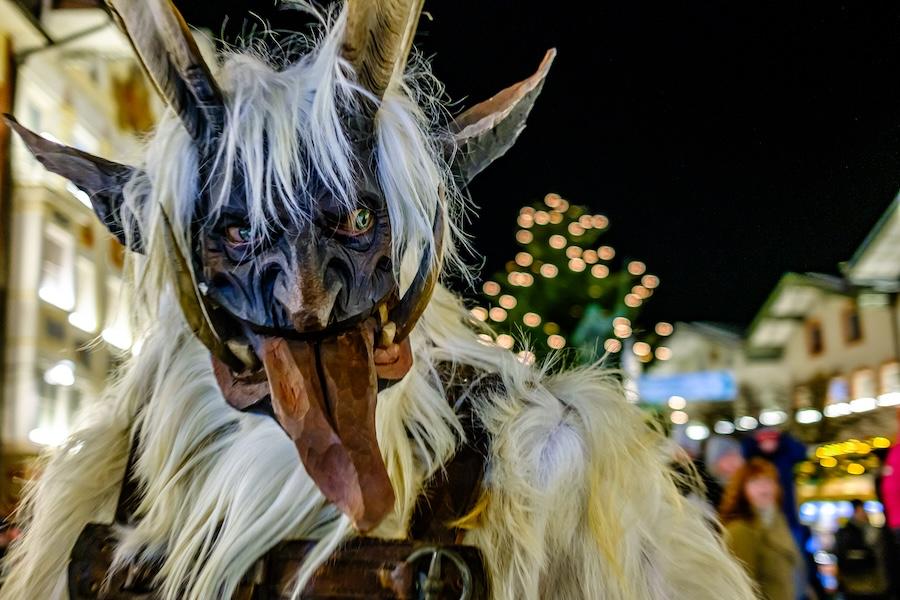
Krampus (Austria), the horned demon, punishes the wicked at Christmastime.
Yule Cat (Iceland) – Foley’s personal favorite – has “the curious preference for eating people who did not get new clothes for Christmas.” Foley suspects this legend was designed to remind grown-ups to clothe the poor for an Icelandic winter, ultimately reminding us of the moral economy of generosity.
Modern characters like the Ghosts of Christmas Past and the Grinch also echo these older traditions but in a gentler form, Foley said.
Psychology behind the darkness
So, what are we to make of these strange stories? Foley believes the devious legends of Yuletide serve as a way to cope with real, winter-related hardships, which were not merely physical but also psychological. Seasonal affective disorder (SAD), stress, depression, suicide, alcohol abuse, family strife, etc., add to the hardships of surviving the long, cold winter and they remain a perennial challenge, Foley said.
“The old spooky elements of Christmas are a way of articulating and coping with these issues,” Foley said. “Myth and legend give voice and face to subconscious stress and thus become a kind of cathartic therapy.”
Light against darkness
Ironically, it is these ghouls and goblins on one side of Christmas that make the bright side brighter. The contract between fear and festivity heightens the sense of coziness of the season, also known as ‘comfort in the midst of discomfort.’ The dark side of Christmas, Foley said, is like the principle of chiaroscuro in art – it makes the lights of Christmas that much brighter.
“Christmas coziness is one of the greatest feelings on earth, but it requires the presence of a real threat. It is only when the weather outside is frightful that the fire is so delightful,” Foley said. “And it’s even more delightful when you know, as they do in Norway, that that fire is keeping witches from coming down your chimney and knocking down your china as they fly around the room.”
So, this holiday season, as you sip cocoa by the tree, remember – Christmas cheer shines brightest against the shadows. And maybe, just maybe, that’s why it’s the most wonderful time of the year.
ABOUT MICHAEL P. FOLEY, PH.D.
Michael P. Foley, Ph.D., is professor of patristics in the Great Texts program and assistant director of University Scholars in the Honors College at Baylor University, where he specializes in the political, philosophical and theological thought of St. Augustine of Hippo. Foley is the author of several books, including “Why We Kiss Under the Mistletoe: Christmas Traditions Explained.”
ABOUT BAYLOR UNIVERSITY
Baylor University is a private Christian University and a nationally ranked Research 1 institution. The University provides a vibrant campus community for 20,000 students by blending interdisciplinary research with an international reputation for educational excellence and a faculty commitment to teaching and scholarship. Chartered in 1845 by the Republic of Texas through the efforts of Baptist pioneers, Baylor is the oldest continually operating University in Texas. Located in Waco, Baylor welcomes students from all 50 states and more than 100 countries to study a broad range of degrees among its 12 nationally recognized academic divisions. Learn more about Baylor University at www.baylor.edu.
ABOUT THE HONORS COLLEGE AT BAYLOR UNIVERSITY
The Honors College at Baylor University unites five academic pathways: the Bachelor of Philosophy degree, the Great Texts major, the University Scholars major, the Baylor Interdisciplinary Core, and the Honors Program. Students may also choose to live in the Honors Residential College, a multi-year community of students that fosters formation through friendship, study, service, and spiritual engagement. Together these opportunities invite undergraduates to explore questions that reach beyond the boundaries of individual disciplines. For more information, visit the Honors College website.