

How “Hamilton” Reshaped History for a New Generation
Q&A with Baylor historian David A. Smith explores the groundbreaking musical and its impact beyond Broadway

(Photo Credit: Getty Images/todamo)

Contact: Kelly Craine, 254-297-9065
Follow us: @BaylorUMedia on X and LinkedIn
When “Hamilton: An American Musical” debuted on Broadway on Aug. 6, 2015, it took the stage and the world by storm. By blending hip-hop, R&B, pop and soul to tell the story of one of America’s founding fathers, the musical by Tony Award-winner Lin-Manuel Miranda broke boundaries and redefined what theater could be.
In this Q&A, David A. Smith, Ph.D., senior lecturer in history at Baylor University and host of David and Art, a weekly radio program on art, culture and history, explores the phenomenon of “Hamilton” and its impact far beyond Broadway.
Q: Why do you think “Hamilton” resonates so strongly with audiences?
Smith: Because it foregrounds humanity. It takes an incredibly complex story – the founding of a country – and makes it accessible by showing the people behind the ideas. We usually turn figures into monuments, but “Hamilton” restores their humanity. And we respond to art better than facts alone. Through music and storytelling, it lets us absorb history in a way that feels personal and hopeful.
Q: How has “Hamilton” reshaped the way Americans think about the nation’s founding and its key figures?
Smith: The musical helps us see the founders as real people, not just portraits on dollar bills. It shows them with frustration, impatience and rivalry – very human traits we often forget when we view them in two dimensions.
Q: The musical was inspired by Ron Chernow’s biography. How closely does it follow the book?
Smith: Very closely. Miranda was deeply faithful to Chernow’s work. In fact, by page two of the book you already see a line that made it into the show. Chernow is a trusted historian, and the musical draws from his careful character studies.
Q: Has “Hamilton” changed the way you approach teaching history?
Smith: Definitely. It reminds me to treat historical figures as human beings first, not just as abstractions or conveyors of ideas. These people had full lives, emotions and flaws – just like us. I now approach them more carefully and empathetically in my teaching.
Q: Beyond your expertise in history, you’re also involved in the arts, such as your work with Waco’s local NPR station KWBU-FM. How do art and history come together for you?
Smith: Every work of art is created in a historical context. Whether it’s Beethoven dedicating a symphony to Napoleon, or the poetry of Keats or Homer, art and history illuminate each other. Bringing them together helps us better understand both – and that’s why I’m so passionate about teaching them side by side.
ABOUT THE AUTHOR
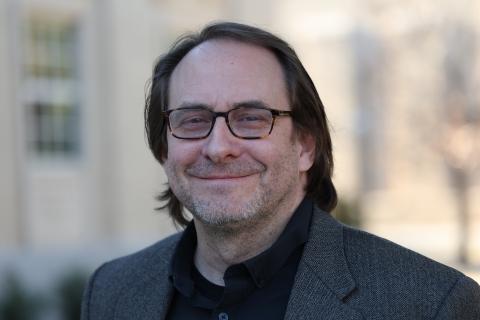
David A. Smith, Ph.D., is a senior lecturer in history at Baylor University. He holds a Ph.D. in modern American history from the University of Missouri. He has written books on American military, cultural and political history, including The Price of Valor: The Life of Audie Murphy, America's Most Decorated Hero of World War II, Money for Art: The Tangled Web of Art and Politics in American Democracy and George S. Patton: A Biography.
His columns on art, culture and politics have appeared in the Weekly Standard, The Wall Street Journal, The Dallas Morning News, Houston Chronicle, Austin American-Statesman and Waco Tribune-Herald.
He has been featured on NPR's Morning Edition, WNYC's "Soundcheck" and KERA's "Think," and he hosts a weekly art feature, “David and Art,” on KWBU-FM.
ABOUT BAYLOR UNIVERSITY
Baylor University is a private Christian University and a nationally ranked Research 1 institution. The University provides a vibrant campus community for more than 20,000 students by blending interdisciplinary research with an international reputation for educational excellence and a faculty commitment to teaching and scholarship. Chartered in 1845 by the Republic of Texas through the efforts of Baptist pioneers, Baylor is the oldest continually operating University in Texas. Located in Waco, Baylor welcomes students from all 50 states and more than 100 countries to study a broad range of degrees among its 12 nationally recognized academic divisions. Learn more about Baylor University at www.baylor.edu.
ABOUT THE COLLEGE OF ARTS & SCIENCES AT BAYLOR UNIVERSITY
The College of Arts & Sciences is Baylor University’s largest academic division, consisting of 25 academic departments in the sciences, humanities, fine arts and social sciences, as well as 11 academic centers and institutes. The more than 5,000 courses taught in the College span topics from art and theatre to religion, philosophy, sociology and the natural sciences. The College’s undergraduate Unified Core Curriculum, which routinely receives top grades in national assessments, emphasizes a liberal education characterized by critical thinking, communication, civic engagement and Christian commitment. Arts & Sciences faculty conduct research around the world, and research on the undergraduate and graduate level is prevalent throughout all disciplines. Visit the College of Arts & Sciences website.