

Baylor’s George A. Yancey, Ph.D., Invested as Member of American Academy of Sciences and Letters
AASL recognizes Baylor social sciences professor for outstanding scholarly achievement
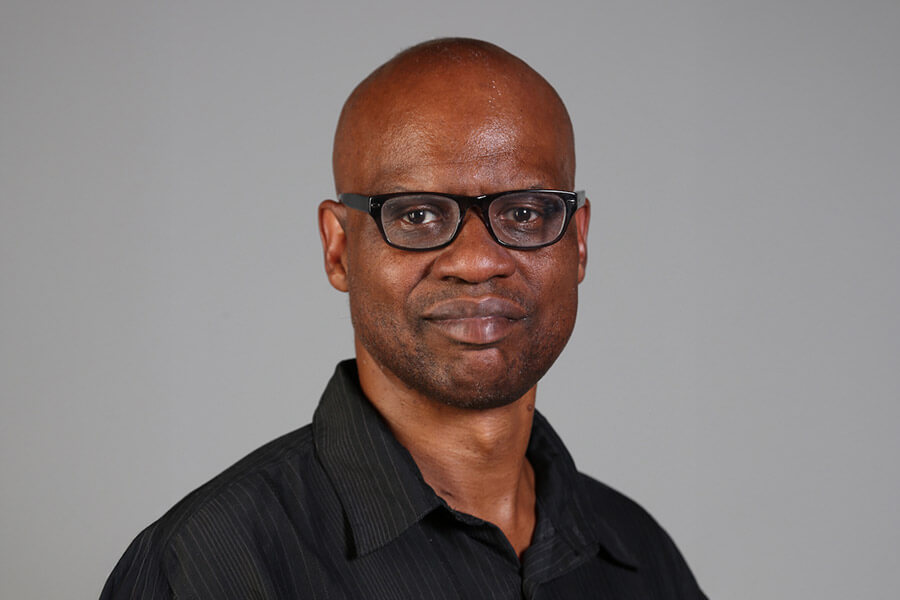
George A. Yancey, Ph.D., professor of the social sciences in the Department of Sociology and the Institute for Studies of Religion at Baylor University
Contact: media@academysciencesletters.org
WASHINGTON, D.C. – George A. Yancey, Ph.D., professor of the social sciences in the Department of Sociology and the Institute for Studies of Religion at Baylor University, has been invested as a member of the American Academy of Sciences and Letters in recognition of outstanding scholarly achievement.
Members of this prestigious academy include Sir Salman Rushdie, Pulitzer Prize winner Jeffrey Eugenides, Nicholas Christakis, Henry Louis Gates Jr., Jonathan Haidt, Steven Pinker, Akhil Reed Amar and three Nobel-laureate scientists, chemist Arieh Warshel, biochemist Jennifer Doudna and chemist Sir David W.C. MacMillan. The investiture was conducted Nov. 12 by Academy President Donald W. Landry, interim president of the University of Florida, and Academy Board Chair Sanjeev R. Kulkarni of Princeton University in a ceremony at the historic Decatur House in Washington, D.C.
“George Yancey has been a significant voice in critically important, and often thorny, scholarly conversations for more than three decades,” said Jeremy Uecker, Ph.D., department chair and associate professor of sociology at Baylor. “This investiture is a fitting tribute to his remarkable contributions, which have advanced our understanding of many complex social issues, including race relations, academic bias, religious prejudice and more.”
Yancey has published numerous research articles on the topics of institutional racial diversity, racial identity, academic bias, progressive Christians and anti-Christian hostility. With Michael Emerson, he was awarded a nearly $500,000 grant from Lilly Endowment Inc. to study multiracial congregations. One of his books, One Faith No Longer, co-authored with Ashlee Quosigk, examines the growing divide between progressive and conservative Christianity in America. Yancey also is on the research team for Baylor’s Institute for Global Human Flourishing.
“I am honored to receive this honor from the American Academy of Science and Letters. The Academy’s goals of integrity and academic freedom match my own,” Yancey said. “I appreciate the recognition of my work. I will strive to be worthy of this honor in my future endeavors. I also appreciate the support I have received from Baylor and look forward to continuing my work at this excellent institution.”
The American Academy of Sciences and Letters promotes scholarship and honors outstanding achievement in the arts, sciences and learned professions. It encourages the fruitful exchange of ideas within academia and society at large by sponsoring occasions for scholarly interaction and providing platforms for the presentation and dissemination of scholarship in the humanities, social sciences, natural sciences, mathematics and engineering. An independent 501(c)(3) non-partisan organization, it offers public programming, supports promising young scholars and promotes traditional liberal arts ideals and standards of intellectual excellence.
“We have been delighted to honor such luminaries as Sir Salman Rushdie and Jay Bhattacharya in previous years, and we are honored to welcome and this year’s group of outstanding scholars,” Landry said. “Like other academies, we honor intellectual excellence, but our Academy is distinguished by a special accent on intellectual courage. All our new members this year reflect the independence of mind we strive to honor.”
Scholars Invested as Academy Members on Nov. 12, 2025:
- Dorian Abbot, Professor of Geophysical Science, University of Chicago
- Eli Y. Adashi, Professor of Medical Science, Brown University
- Dale C. Allison Jr., Richard J. Dearborn Professor of New Testament, Princeton Theological Seminary
- Peter S. Arcidiacono, William Henry Glasson Distinguished Professor of Economics, Duke University
- Randy Evan Barnett, Patrick Hotung Professor of Constitutional Law, Georgetown University
- Shadi Bartsch, Helen A. Regenstein Distinguished Service Professor of Classics, University of Chicago
- William Baude, Harry Kalven, Jr. Professor of Law, University of Chicago
- Sian Leah Beilock, President, Dartmouth
- Richard P. Binzel, Professor of Planetary Sciences, Massachusetts Institute of Technology
- Michael J. Birrer, Vice Chancellor and Director of the Winthrop P. Rockefeller Cancer Institute, University of Arkansas for Medical Sciences
- Janet M. Box-Steffensmeier, Distinguished University Professor, Vernal Riffe Professor of Political Science and Professor of Sociology, The Ohio State University
- David Bromwich, Sterling Professor of English, Yale University
- Lara M. Buchak, Professor of Philosophy, Princeton University
- Jennifer Louise Burns, Professor of History, Stanford University
- Charles E. Butterworth, Professor of Government and Politics Emeritus, University of Maryland
- Michael Cook, Class of 1943 University Professor Emeritus of Near Eastern Studies, Princeton University
- Leda Cosmides, Distinguished Professor of Psychological & Brain Sciences, University of California-Santa Barbara
- Steven J. Davis, Thomas W. and Susan B. Ford Senior Fellow and Director of Research at the Hoover Institution and Senior Fellow at the Stanford Institute for Economic Policy Research, Stanford University; and William H. Abbott Distinguished Service Professor Emeritus of International Business and Economics, University of Chicago
- Stefanie A. DeLuca, James Coleman Professor of Sociology and Social Policy, Johns Hopkins University
- Dan Edelstein, William H. Bonsall Professor of French in the School of Humanities and Sciences, Stanford University
- Igor R. Efimov, Professor of Biomedical Engineering and Professor of Medicine, Northwestern University
- E. Wesley Ely, Professor of Medicine and Critical Care, Vanderbilt University
- Margot E. Fassler, Keough-Hesburgh Professor Emeritus of Music History and Liturgy, University of Notre Dame; and Robert Tangeman Professor Emeritus of Music History, Yale University
- Roland G. Fryer Jr., Professor of Economics, Harvard University
- Bryan Garsten, Professor of Political Science and Humanities, Yale University
- Sylvester James Gates Jr., Clark Leadership Chair in Science, Physics Department Professor, and School of Public Policy Professor, University of Maryland
- Sherif Girgis, Professor of Law, University of Notre Dame
- Shafi Goldwasser, RSA Professor of Electrical Engineering and Computer Science, Massachusetts Institute of Technology
- Anthony Grafton, Henry Putnam University Professor Emeritus of History, Princeton University
- Brad S. Gregory, Professor of History, University of Notre Dame
- Mary Lou Guerinot, Professor of Biological Sciences and Ronald and Deborah Harris Professor in the Sciences, Dartmouth
- Stephen H. Haber, A.A. and Jeanne Welch Milligan Professor in the School of Humanities and Sciences, and Park L. Loughlin Senior Fellow of the Hoover Institution, Stanford University
- William Happer, Professor of Physics Emeritus, Princeton University
- Gail L. Heriot, Professor of Law (Retired), University of San Diego
- Gene Andrew Jarrett, William S. Tod Professor of English, Princeton University
- Leemor Joshua-Tor, W.M. Keck Professor of Structural Biology, Director of Research, and HHMI Investigator, Cold Spring Harbor Laboratory
- Alexander V. Kabanov, Mescal Swain Ferguson Distinguished Professor at the Center for Nanotechnology in Drug Delivery, University of North Carolina-Chapel Hill
- Prashant V. Kamat, Rev. John A. Zahm Professor of Science, University of Notre Dame
- Leon R. Kass, Addie Clark Harding Professor Emeritus in the Committee on Social Thought and in the College, University of Chicago
- Alan Charles Kors, Henry Charles Lea Professor Emeritus of History, University of Pennsylvania
- Stephen Kotkin, Kleinheinz Senior Fellow at the Hoover Institution, Stanford University
- Anthony T. Kronman, Sterling Professor of Law, Yale University
- Steven D. Leach, Professor of Molecular and Systems Biology, Surgery and Medicine; the Preston T. and Virginia R. Kelsey Distinguished Chair in Cancer; and Associate Dean for Cancer Program, Dartmouth
- Glenn C. Loury, Merton P. Stoltz Professor of the Social Sciences, Brown University
- David W. C. MacMillan, James S. McDonnell Distinguished University Professor of Chemistry, Princeton University
- Paul R. McHugh, Professor of Psychiatry and Behavioral Sciences, Johns Hopkins University
- Shaul Mukamel, Distinguished Professor of Chemistry and of Physics and Astronomy, University of California-Irvine
- Gustavo Pérez Firmat, David Feinson Professor Emeritus of Humanities, Columbia University
- Paul E. Peterson, Henry Lee Shattuck Professor of Government, Harvard University
- David A. Relman, Thomas C. and Joan M. Merigan Professor of Medicine and Professor of Microbiology and Immunology, Stanford University
- Howard A. Stone, Neil A. Omenn ’68 University Professor of Mechanical and Aerospace Engineering, Princeton University
- Steven M. Teles, Professor of Political Science, Johns Hopkins University
- Philip E. Tetlock, Annenberg University Professor in the School of Arts and Sciences and the Wharton School, University of Pennsylvania
- Karl Albert van Bibber, Professor of Nuclear Engineering, University of California-Berkeley
- Katja Maria Vogt, Professor of Philosophy and Affiliate of the Data Science Institute, Columbia University
- Joseph H. H. Weiler, University Professor in the School of Law, New York University; and Senior Fellow, Minda de Gunzburg Center for European Studies, Harvard University
- George A. Yancey, Professor of Sociology, Baylor University
- Gil Zussman, Kenneth Brayer Professor of Electrical Engineering, Columbia University
ABOUT BAYLOR UNIVERSITY
Baylor University is a private Christian University and a nationally ranked Research 1 institution. The University provides a vibrant campus community for 20,000 students by blending interdisciplinary research with an international reputation for educational excellence and a faculty commitment to teaching and scholarship. Chartered in 1845 by the Republic of Texas through the efforts of Baptist pioneers, Baylor is the oldest continually operating University in Texas. Located in Waco, Baylor welcomes students from all 50 states and more than 100 countries to study a broad range of degrees among its 12 nationally recognized academic divisions. Learn more about Baylor University at www.baylor.edu.
ABOUT THE COLLEGE OF ARTS & SCIENCES AT BAYLOR UNIVERSITY
The College of Arts & Sciences is Baylor University’s largest academic division, consisting of 25 academic departments in the sciences, humanities, fine arts and social sciences, as well as 11 academic centers and institutes. The more than 5,000 courses taught in the College span topics from art and theatre to religion, philosophy, sociology and the natural sciences. The College’s undergraduate Unified Core Curriculum, which routinely receives top grades in national assessments, emphasizes a liberal education characterized by critical thinking, communication, civic engagement and Christian commitment. Arts & Sciences faculty conduct research around the world, and research on the undergraduate and graduate level is prevalent throughout all disciplines. Visit the College of Arts & Sciences website.
ABOUT THE BAYLOR INSTITUTE FOR STUDIES OF RELIGION
Launched in August 2004, the Baylor Institute for Studies of Religion (ISR) initiates, supports and conducts research on religion, involving scholars and projects spanning the intellectual spectrum: history, psychology, sociology, economics, anthropology, political science, epidemiology, theology and religious studies. The institute’s mandate extends to all religions, everywhere, and throughout history, and embraces the study of religious effects on prosocial behavior, family life, population health, economic development and social conflict. For more information, visit the Baylor ISR website.