

Baylor Partners on Up to $28M Initiative to Build Precision Phage Platform for Promoting Public Health
Amid rising antibiotic resistance, MIGHTY initiative unites top academic and industry partners to develop a rapid, AI-powered platform for precision phage therapies – starting with oral health and expanding to chronic diseases
Credit: nopparit / Collection: E+ via Getty Images
Media Contact: Lori Fogleman, 254-709-5959
Follow us: @BaylorUMedia on X and LinkedIn

Baylor University will partner with investigators from industrial and academic institutions, including the University of Illinois Urbana-Champaign’s Carl R. Woese Institute for Genomic Biology, Ginkgo Bioworks, University of Minnesota, Oregon State University and Oregon Health & Science University on a five-year, up to $28 million initiative funded by the Advanced Research Projects Agency for Health (ARPA-H).
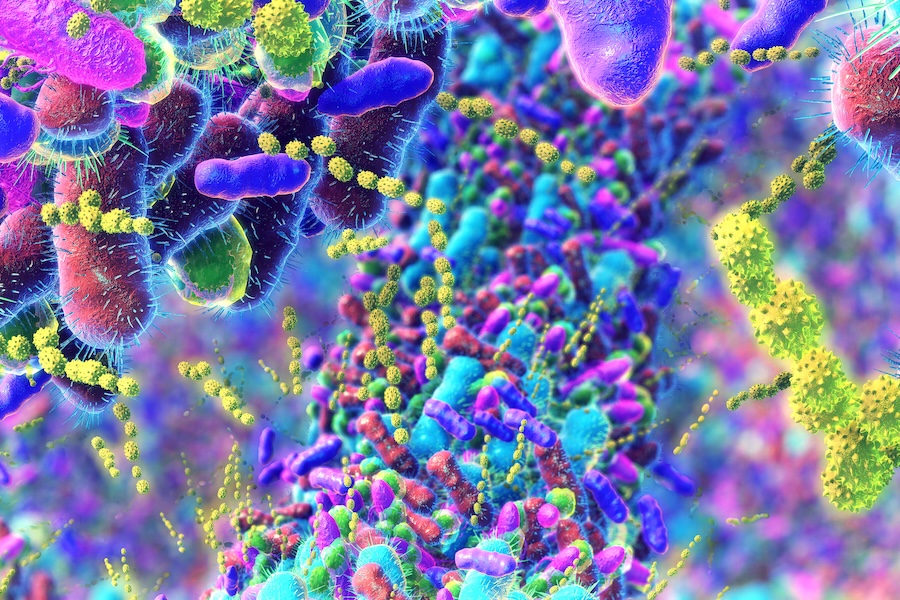
Their project “Microbe/phage Investigation for Generalized Health TherapY (MIGHTY),” aims to harness the natural predators of bacteria – known as phages – as precision tools to shape the human microbiome and promote health.
Aaron Wright, Ph.D., The Schofield Endowed Chair in Biomedical Science in Baylor’s Department of Biology, will lead Baylor’s contributions to the larger team, supplying expertise in microbes and chemical biology to the broader effort.
“It’s incredibly exciting to be a part of projects that advance health-based research,” Wright said. “Rarely do you get to be on a project where you can say, ‘After five years, we can offer a tangible product for human health.’ Promoting health is a priority at Baylor and in our Department of Biology. This initiative gives us a tremendous opportunity to help others.”
A precision alternative to antibiotics
Our bodies contain trillions of bacteria that can influence our health. Many are beneficial, but disruptions in their numbers or invasion by pathogens can cause a variety of diseases. For decades, antibiotics have been our go-to defense against harmful bacteria, but they also indiscriminately kill the natural bacterial residents of the microbiome that are important for maintaining health. This often leads to microbiome imbalances, or dysbiosis, that can fuel chronic diseases. Meanwhile, antibiotic resistance continues to rise, compounding the global public health crisis.
Currently, there are few reliable tools that can restore the microbiome balance. Researchers are now turning to phages, the naturally occurring viruses that selectively infect and kill bacteria and already exist throughout the human body. Phages have potential transformative uses as precision antimicrobials because they target specific pathogens while leaving beneficial bacteria unharmed. However, the process of isolating phages from the environment for therapeutic purposes is currently slow and inefficient, and single-phage treatments often fail due to rapid bacterial resistance, leaving the generalized use of phages still out of reach.
Overcoming these challenges, the MIGHTY team will create a platform that enables rapid isolation of bacteria and phages at an unprecedented scale and apply mechanistic modeling and artificial intelligence/machine learning methods to identify effective phage combinations that eradicate harmful bacteria.
Starting with oral health – and reaching further
As an initial application, the team will focus on the oral microbiome where bacterial pathogens drive tooth decay and gum disease, while also contributing to chronic illnesses, including cardiovascular disease, Type II diabetes, and oral and colorectal cancers. The researchers aim to develop an easy-to-use, low-cost phage product – such as a chewable gummy – that can improve oral health for everyone.
“Our long-term goal is to usher phage-based therapeutics into mainstream medicine as routine and widely accessible treatments,” said Asma Hatoum-Aslan, an associate professor of microbiology and lead on the project. “A simple product for oral care is just the start – this platform will support solutions for gut, metabolic, and autoimmune diseases as well.”
The team will leverage researchers’ deep expertise in bacterial genetics, phage biology, microbiome studies, computational biology, and machine learning, and integrate cutting-edge technologies, such as Ginkgo’s ultra-high-throughput screening technology, and activity-based chemical probes developed at Baylor.
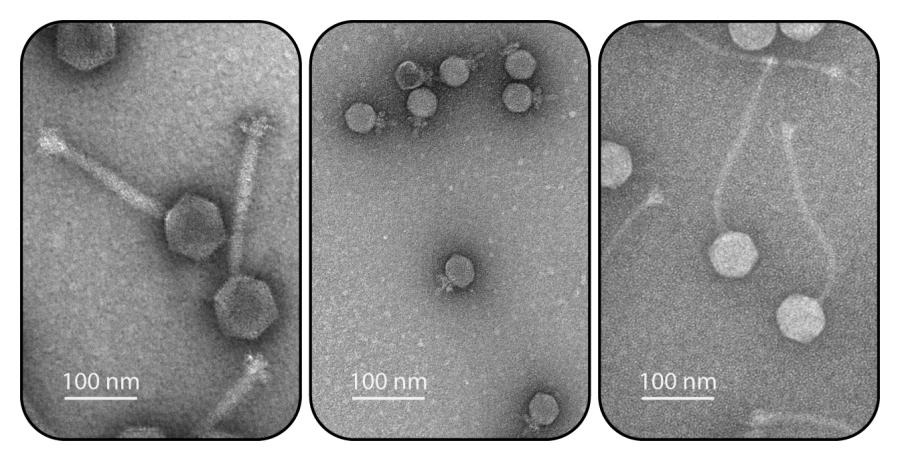
Wright, whose work generally focuses on the gut microbiome, will focus on microbes in the mouth, which can be envisioned as having its own microbiome. His characterization of bacteriophages, and the pathogens with which they interact, will undergird further work to develop therapeutics. These therapeutics could feature naturally occurring phages which selectively target specific harmful bacteria or engineered phages which do the same.
"Dr. Wright’s interdisciplinary expertise and understanding of the bacteria that impact human health introduces new frontiers for scientific study. It’s gratifying to see his participation in a large, multi-institution project that combines the research streams of top scientists across the country to develop tangible solutions for health challenges,” Provost Nancy Brickhouse, Ph.D., said. “We look forward to seeing the far-reaching impact of this work in the years ahead.”
The project is overseen by Program Manager Andrew Brack, Ph.D., with ARPA-H.
ABOUT BAYLOR UNIVERSITY
Baylor University is a private Christian University and a nationally ranked Research 1 institution. The University provides a vibrant campus community for 20,000 students by blending interdisciplinary research with an international reputation for educational excellence and a faculty commitment to teaching and scholarship. Chartered in 1845 by the Republic of Texas through the efforts of Baptist pioneers, Baylor is the oldest continually operating University in Texas. Located in Waco, Baylor welcomes students from all 50 states and more than 100 countries to study a broad range of degrees among its 12 nationally recognized academic divisions. Learn more about Baylor University at www.baylor.edu.
ABOUT THE COLLEGE OF ARTS & SCIENCES AT BAYLOR UNIVERSITY
The College of Arts & Sciences is Baylor University’s largest academic division, consisting of 25 academic departments in the sciences, humanities, fine arts and social sciences, as well as 11 academic centers and institutes. The more than 5,000 courses taught in the College span topics from art and theatre to religion, philosophy, sociology and the natural sciences. The College’s undergraduate Unified Core Curriculum, which routinely receives top grades in national assessments, emphasizes a liberal education characterized by critical thinking, communication, civic engagement and Christian commitment. Arts & Sciences faculty conduct research around the world, and research on the undergraduate and graduate level is prevalent throughout all disciplines. Visit the College of Arts & Sciences website.