

AI-driven Precision Nutrition Could Transform Cancer Treatment
By replicating an individual's gut function, research points to the possibilities for tailoring nutrition to a patient's unique biology
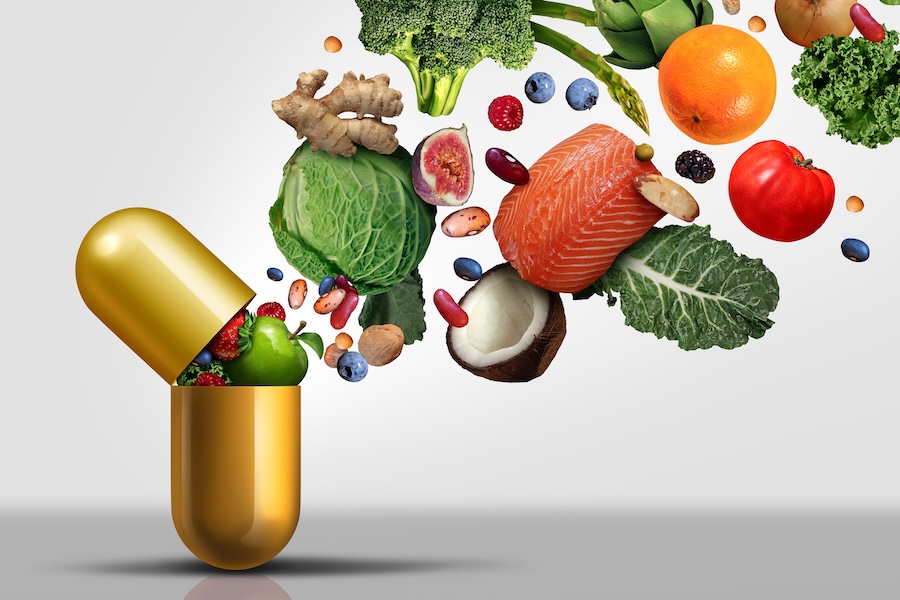
Photo Credit: Getty Images/WildPixel
Contact: Kelly Craine, 254-297-9065
Follow us: @BaylorUMedia on X and LinkedIn

Could artificial intelligence tools, especially domain-specific large language models, revolutionize cancer treatment by tailoring nutrition to each patient’s unique biology? A recent review in the journal Cell Host & Microbe by Baylor University researchers Leigh Greathouse, Ph.D., associate professor of nutrition sciences, and Anakan Choudhury, Ph.D., post-doctoral research fellow, highlights the game‑changing potential of AI to personalize nutrition aimed at cancer prevention and therapy.
A cancer survivor herself, Greathouse is a cancer biologist and registered dietitian whose research focuses on understanding how diet and the microbiome converge to influence cancer development, treatment response and survivorship. As a member of the Greathouse Lab at Baylor, Choudhury’s research involves exploring key bacterial markers in the gut microbiomes of colon cancer patients and identifying key dietary indicators for a healthy gut microbiome to improve their response to chemotherapy/ immunotherapy.
“Cancer patients face some of the most complex treatment challenges,” Greathouse said. “An AI tool can integrate patterns across multiple domains – nutrition, cancer biology, pharmacology, genetics. Health care providers can make the most precise, informed decisions possible for each patient.”
Digital gut twin technology
The gut microbiome plays a pivotal role in human health, particularly in cancer prevention and treatment. In their review, the Baylor researchers point to a digital gut twin, a computer-based model of an individual’s gut microbiome that uses AI and biological data to simulate how the gut responds to diet, drugs and disease. This tool would act as a dynamic, virtual representation of a patient’s gut microbiome and their specific health data.
By integrating clinical test results, dietary information, microbiome profiles and peer-reviewed research, the system could suggest highly targeted dietary and treatment interventions – and continually refine them as new information emerges. Greathouse sees this as the future of health care.
“With the rapid advancement of AI, we have the potential to transform how we approach precision nutrition.” - Leigh Greathouse, Ph.D.
“With the rapid advancement of AI, we have the potential to transform how we approach precision nutrition,” she said. “It augments the health provider's ability to make more informed decisions about interventions for that patient based on their physiological response or makeup.”
While challenges remain before these tools reach everyday medical practice, by merging advances in artificial intelligence with insights from nutrition and microbiome science, researchers are laying the foundation for a future where cancer prevention and treatment are informed by a patient’s distinctive biology.
ABOUT LEIGH GREATHOUSE, PH.D., MPH, MS, RD
K. Leigh Greathouse, Ph.D., MPH, MS, RD, is an associate professor at Baylor University with joint appointments in the Department of Biology in the College of Arts & Sciences and Department of Nutrition Sciences in the Robbins College of Health and Human Sciences. A cancer biologist and registered dietitian, her work focuses on understanding how diet and the microbiome converge to influence cancer development, treatment response and survivorship. Her research is driven both by her expertise in molecular biology and her personal experience as a young adult cancer survivor, fueling her passion for advancing precision nutrition approaches to improve cancer outcomes.
ABOUT ANKAN CHOUDHURY, PH.D.
Ankan Choudhury, Ph.D., is a post-doctoral fellow with the Greathouse Lab at Baylor University. His current research involves exploring key bacterial markers in the gut microbiomes of colon cancer patients and identifying key dietary indicators that are crucial in maintaining a healthy gut microbiome for such patients which will improve their response to chemotherapy/ immunotherapy and increase survivability, understanding the role of indole and indole-derived metabolites in the biofilm formation procedure of key species of gut microbiome and their influence on turning the species into an opportunistic pathogen and exploring the role of nucleic acid load of outer membrane vesicles (OMVs) of pathogenic strains Bacteroides fragilis and determining the fate of such OMVs and their cargo upon entering host cells, using click-chemistry aided fluorophore tagging.
ABOUT BAYLOR UNIVERSITY
Baylor University is a private Christian University and a nationally ranked Research 1 institution. The University provides a vibrant campus community for more than 20,000 students by blending interdisciplinary research with an international reputation for educational excellence and a faculty commitment to teaching and scholarship. Chartered in 1845 by the Republic of Texas through the efforts of Baptist pioneers, Baylor is the oldest continually operating University in Texas. Located in Waco, Baylor welcomes students from all 50 states and more than 100 countries to study a broad range of degrees among its 12 nationally recognized academic divisions. Learn more about Baylor University at www.baylor.edu.
ABOUT ROBBINS COLLEGE OF HEALTH AND HUMAN SCIENCES AT BAYLOR UNIVERSITY
The Robbins College of Health and Human Sciences at Baylor University seeks to prepare leaders in health and quality of life through science, scholarship and innovation. Together, the departments housed within the Robbins College – Communication Sciences and Disorders; Health, Human Performance and Recreation; Human Sciences and Design; Occupational Therapy; Physical Therapy; Public Health; and a number of Army-Baylor graduate programs – promote a team-based approach to transformational education and research, establishing interdisciplinary research collaborations to advance solutions for improving quality of life for individuals, families and communities. For more information, visit the Robbins College website.